
June 18, 2026
Words and Photos by Tomás Montes
The Angustias Tour got its name before we even left Madrid.
The day before departure, Javi and I spent hours walking in circles around his apartment in Rivas-Vaciamadrid trying to finish preparing the bikes. There were too many bicycles, tools, bags and racks having to be mounted, camera batteries charging in random corners of the house, bags halfpacked and food spread across the floor of the living room. Javi was still trying to finish mounting one of the Old Man Mountain racks and we had realised that a bolt was missing.
At some point during the afternoon we had to visit hardware store searching for a replacement screw and somehow ended up buying a tiny gardening shovel as well. We convinced ourselves it was an important piece of bikepacking equipment because we planned to camp throughout the trip and wanted to handle things properly. That tiny shovel would later become unexpectedly relevant.
Tomás Montes
Guest Contributor
Back at the apartment, time kept disappearing. I wanted to go outside before sunset to make some photos of the bikes. Javi wanted to stop being indoors and finally begin moving south. Instead we kept reorganising the same bags over and over again.
I was also stressed about what would happen after this trip ended. I still needed to figure out my transport to Málaga without knowing where I will end, then comeback to Madrid en heat to Girona for Traka, while waiting for information from those assigments that still hadn’t arrived.
At some point Javi laughed and said that before even starting the trip we were already overwhelmed.
“Angustias Tour,” one of us said.
The name stayed. And honestly, over the following days the route did everything possible to justify it.
Linking Peaks
The trip itself existed because of another much larger idea already forming inside Javi’s head.
The previous year he had completed IGARE, a huge self-supported project riding the stages and transfers of the three Grand Tours ahead of the professional peloton. Most people would probably need a long break after something like that. Javi lasted approximately zero days.
Soon he was already thinking about Linking Peaks, a route connecting the highest summit of every Spanish province by bike. More than 7,000 kilometres of mixed terrain with no external support. And because many of those summits are not rideable, the route would also involve leaving the bike somewhere below and continuing on foot toward the peak.
Our ride through Andalucía became an early scouting mission for part of that future project. Some sections worked beautifully. Others absolutely did not. That was part of the point. I joined Javi for the first week, riding from southern Extremadura all the way to, originally Ronda, before heading toward Málaga for another assignment.
Living Off The Bike
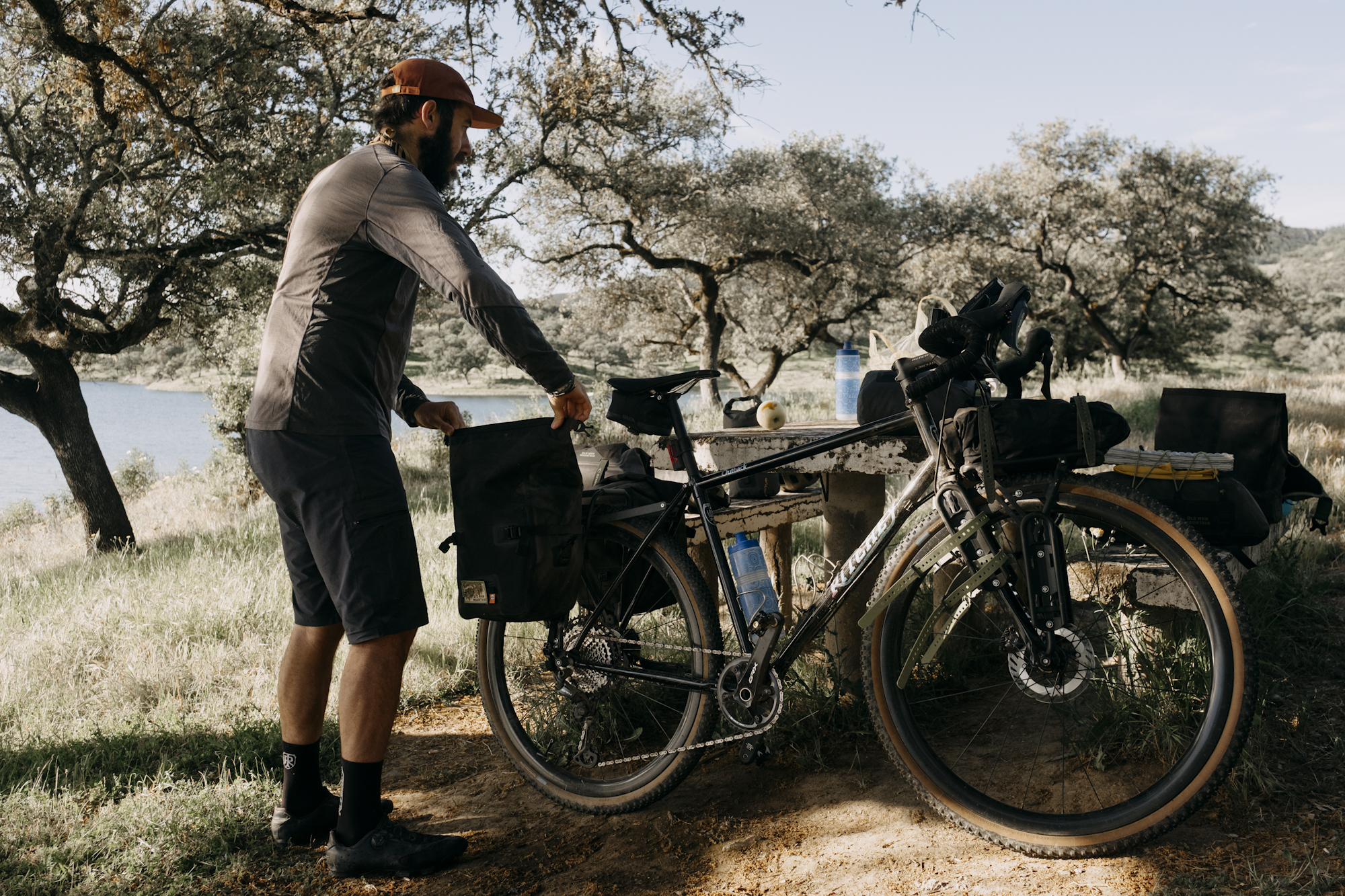
By the time we finally boarded the train south from Madrid our bikes weighed well over thirty kilograms each. At first that felt ridiculous. Then, after the first climbs out of Zafra, it simply became normal. The loaded bikes stopped feeling like sports equipment and slowly became tiny moving houses. Sleeping gear, spare clothes, cooking equipment, cameras, food and tools all settled into their own place inside the bags.
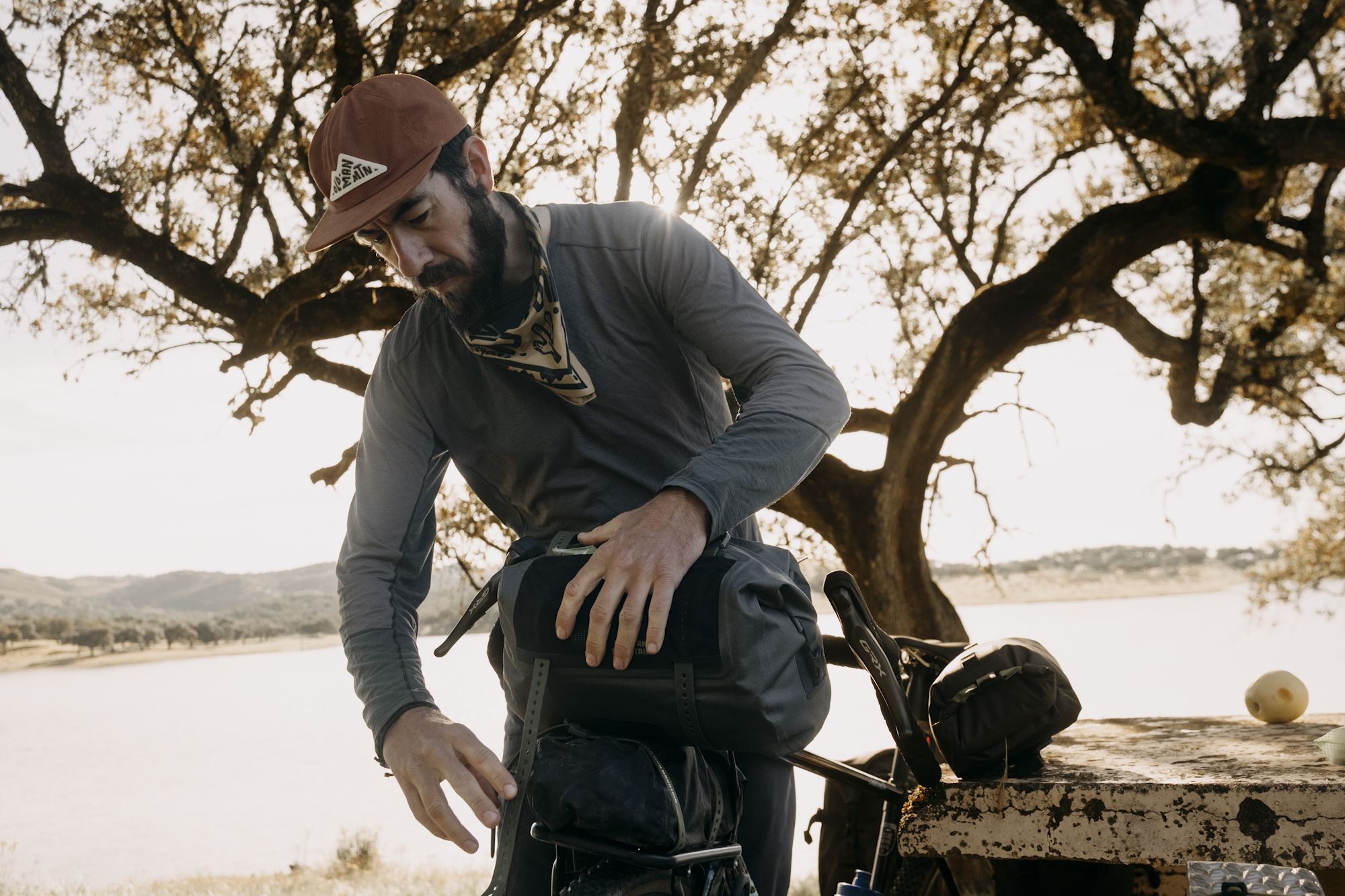
That was probably the thing I appreciated most about the Old Man Mountain setup during the trip. Not that it looked particularly technical, but that after a few days it simply disappeared into the background. We stopped thinking about the bags and started living out of them. That changes the relationship with equipment completely. During the trip we lifted the bikes over fences, pushed them through sand, carried food for several days at a time and crossed streams with water almost up to our knees. Some nights we slept beside reservoirs, others under unfinished beach bars or hidden between rows of fruit trees.
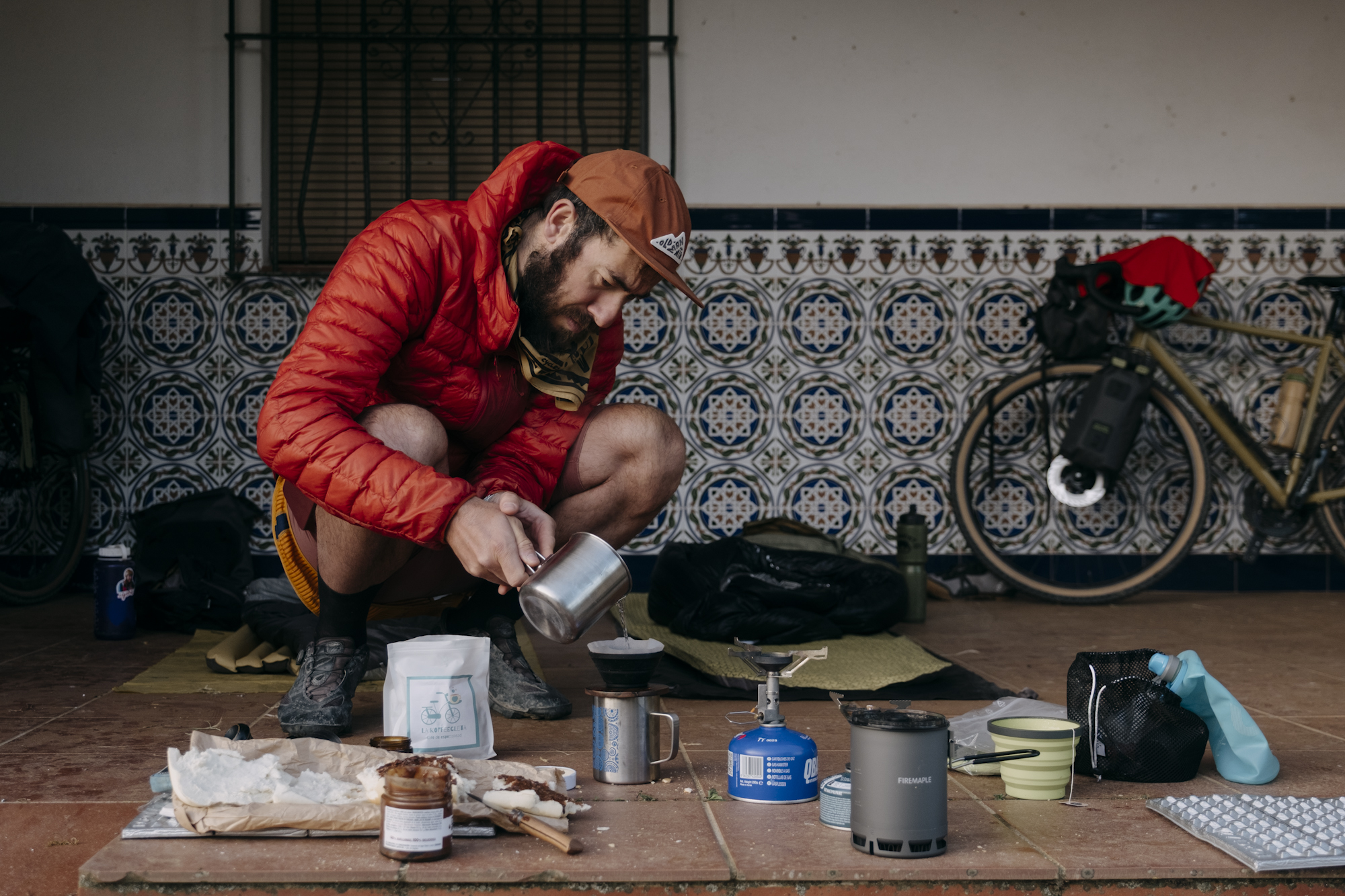
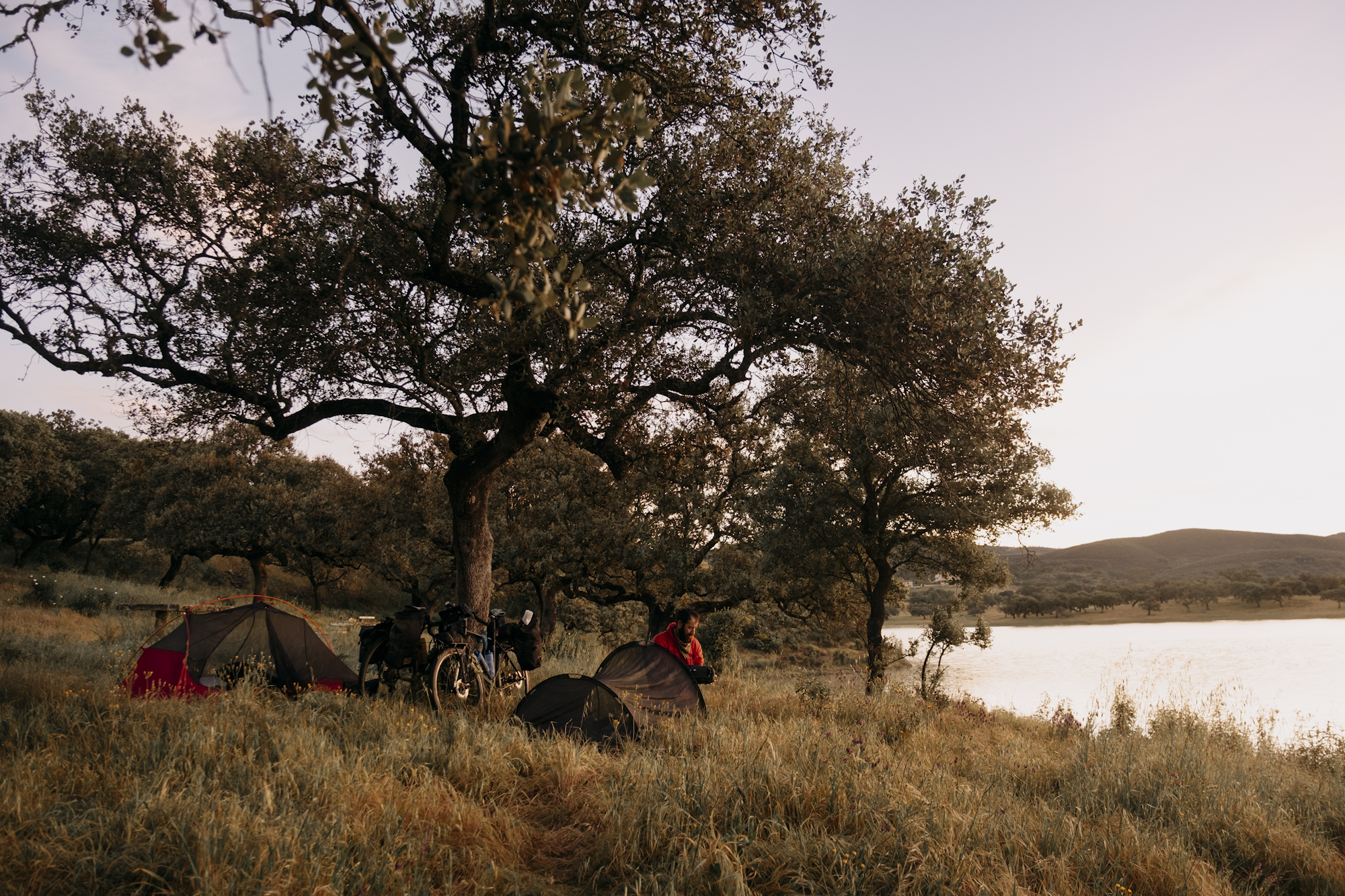
Every evening ended more or less the same way. Find water. Find food. Find somewhere discreet to sleep. Cook dinner. Try to organise the chaos before darkness fully arrived. And every morning started slowly. Javi always woke up before me. By the time I crawled out of the tent he usually already had water boiling for coffee. He carried a small coffee setup from Koffecleta that turned every breakfast stop into a tiny ritual. I stuck to tea bags because they occupied less space and required less thought and I don’t like coffee at all, controversial, I know.
While we packed sleeping bags and dried condensation from the tents in the morning sun, the bikes slowly returned to their daytime form. I noticed after a few days that both of us already knew exactly where everything was packed. Snacks. Rain layers. Stove. Tools. Sunscreen.Those small repetitive actions slowly became automatic. And honestly, those moments are probably much closer to what travelling by bike actually feels like than any dramatic summit photo.
Extremadura
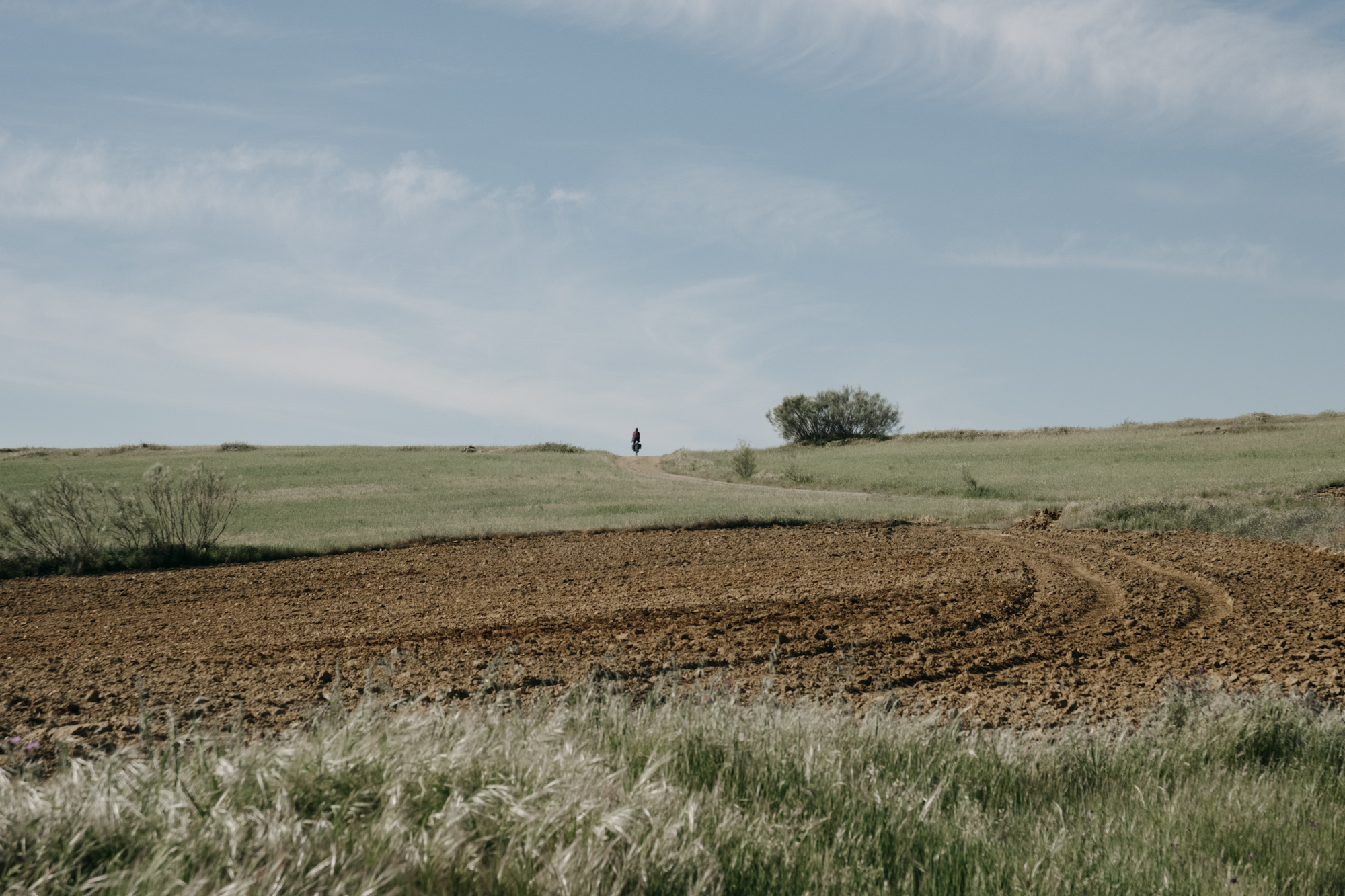
The first days through Extremadura surprised both of us. I expected dry landscapes immediately, but spring had completely transformed the region. Everything was intensely green. Wildflowers covered the roadsides and reservoirs reflected the afternoon light while storks moved slowly above the fields.
At one point we climbed toward Tentudía through blooming rockrose while insects bounced constantly against our helmets and sunglasses. The heat, however, arrived exactly as expected. Every afternoon became a calculation. Do we have enough water? Will the next shop still be open? Can we reach somewhere suitable to sleep before dark? The bikes constantly changed weight throughout the day. Sometimes we would leave a village feeling relatively light. Then we would stop at a supermarket and suddenly load the bikes again with litres of water, pasta, bread, tuna and breakfast for the following morning.
I remember one evening near Calzadilla de los Barros when we found a small recreational area beside an ermita after dark. There was a porch, a water tap and just enough flat ground to sleep. At that point it felt luxurious. That became one of the recurring lessons of the trip. Comfort slowly changed meaning. A functioning water fountain became exciting. Dry socks became important. A shady place to stop during the afternoon heat could completely change your mood. After several days riding like that, life reduces itself to very simple things.
Río Tinto
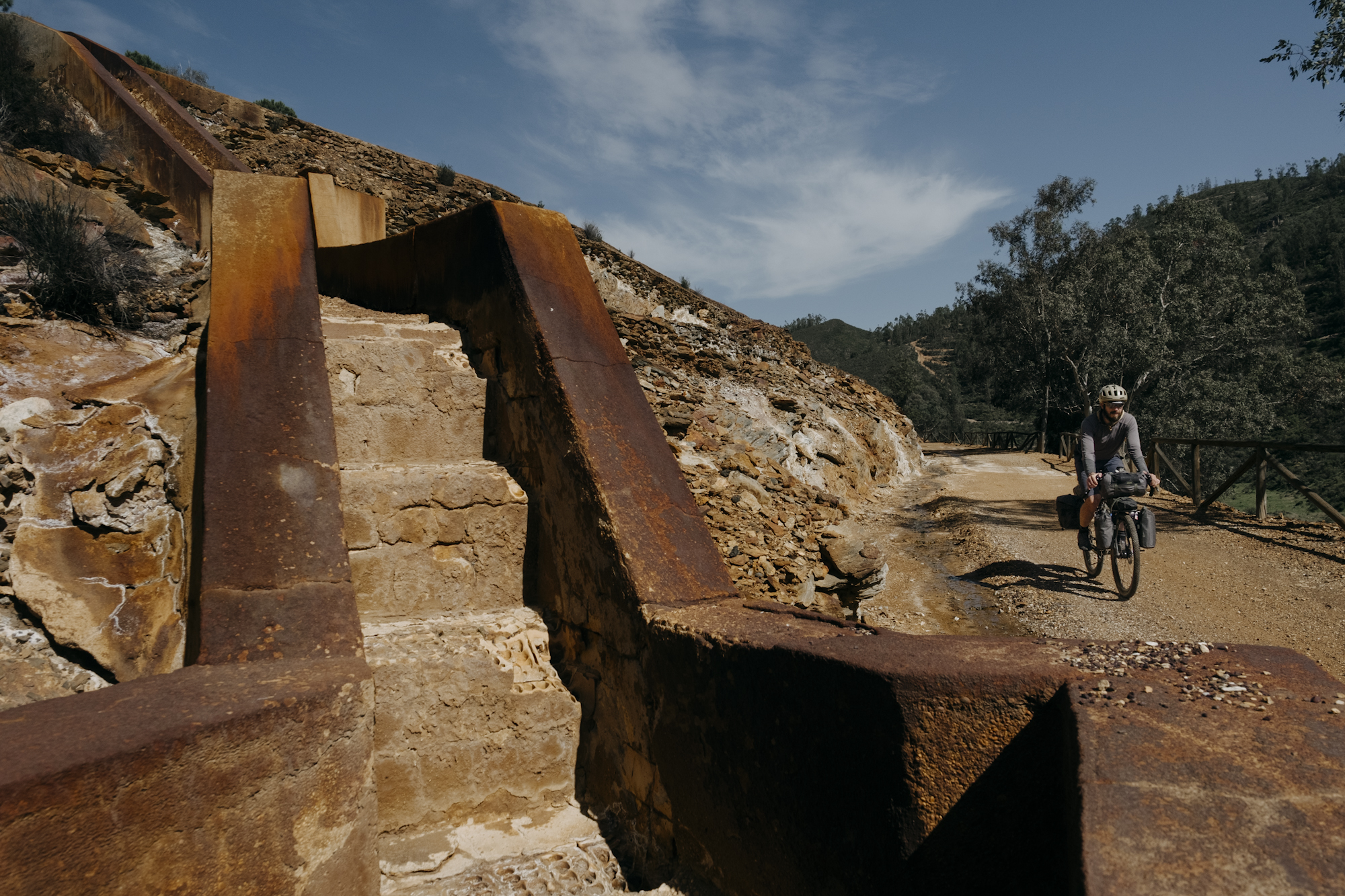
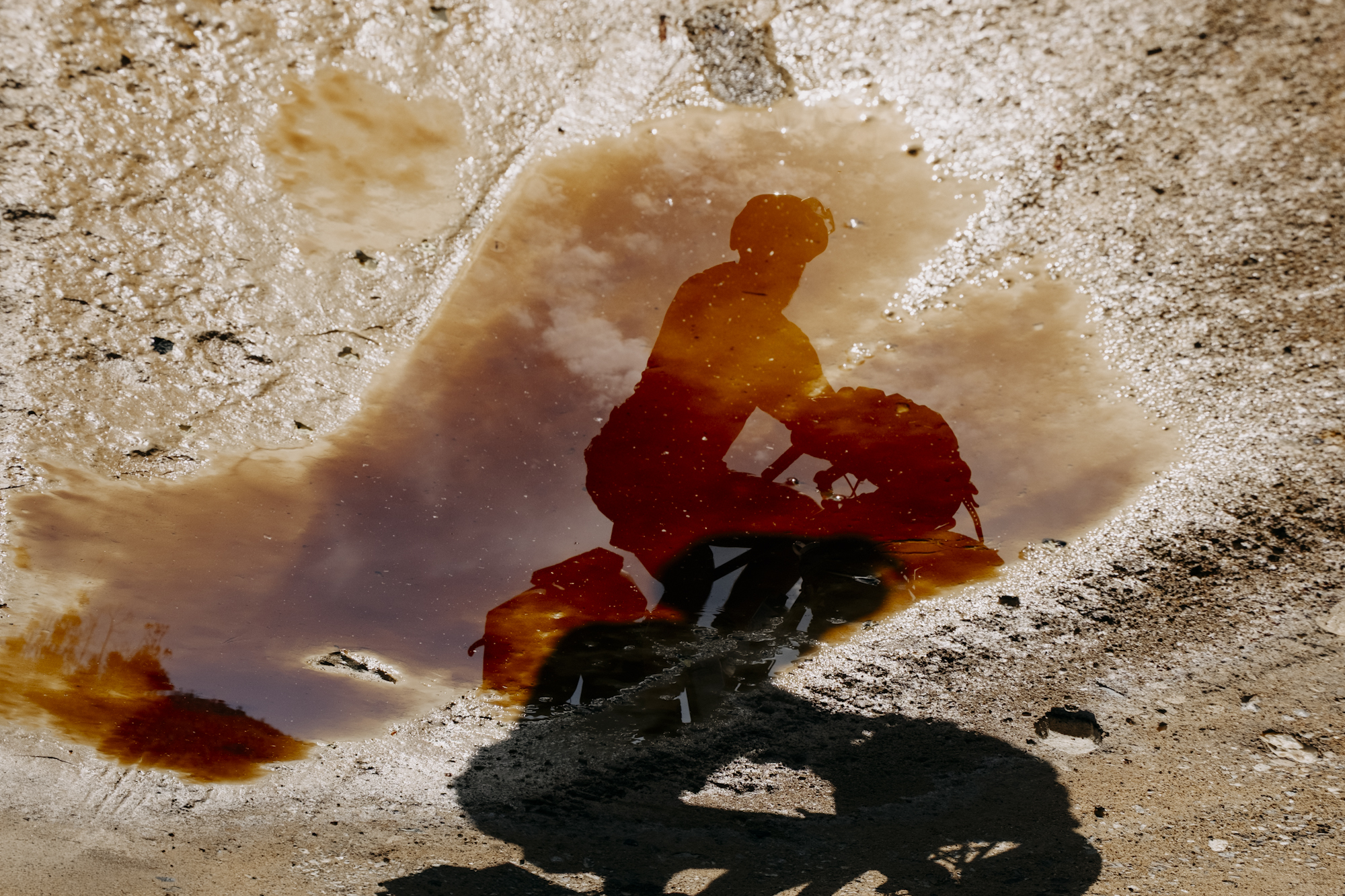
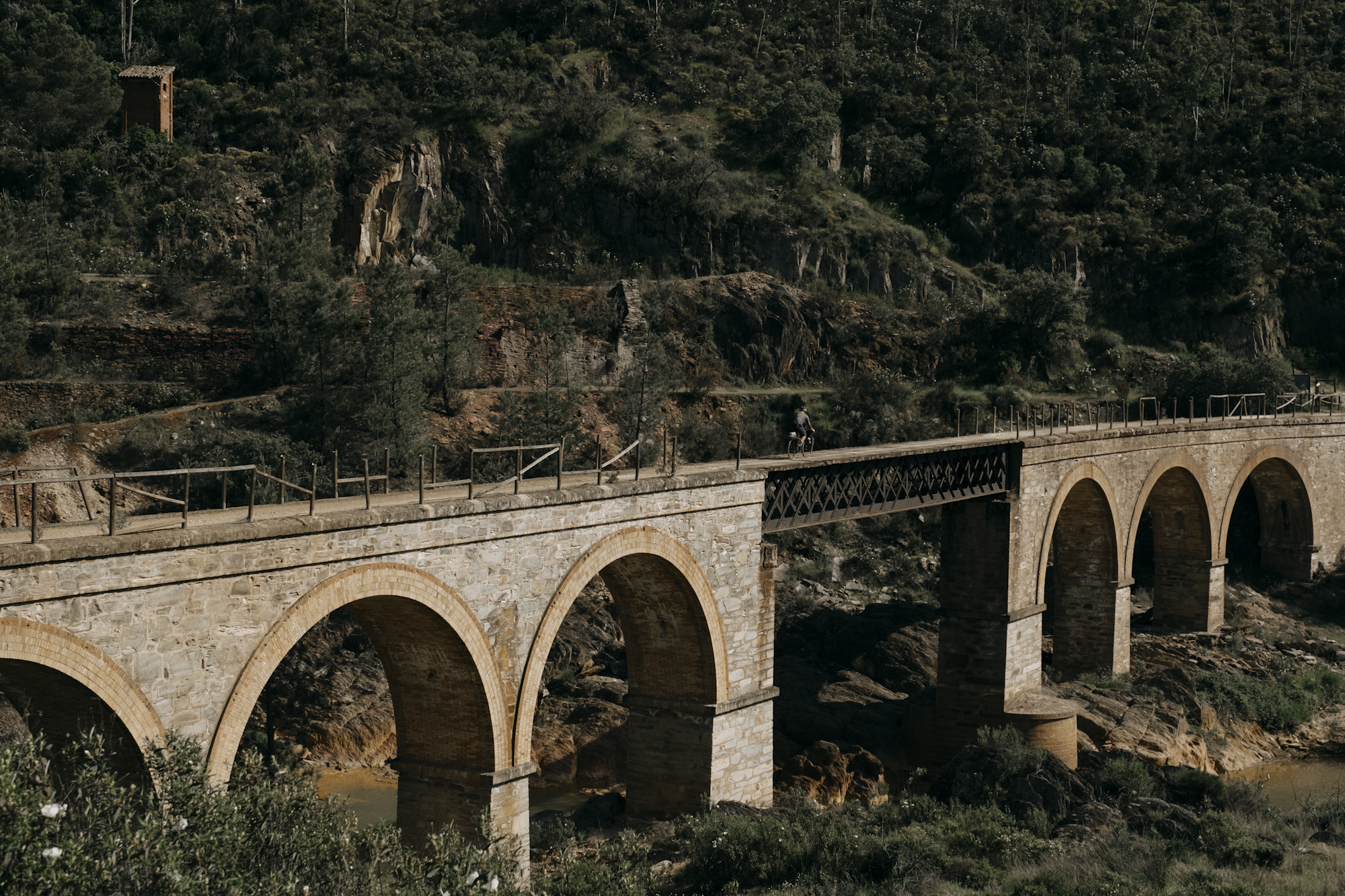
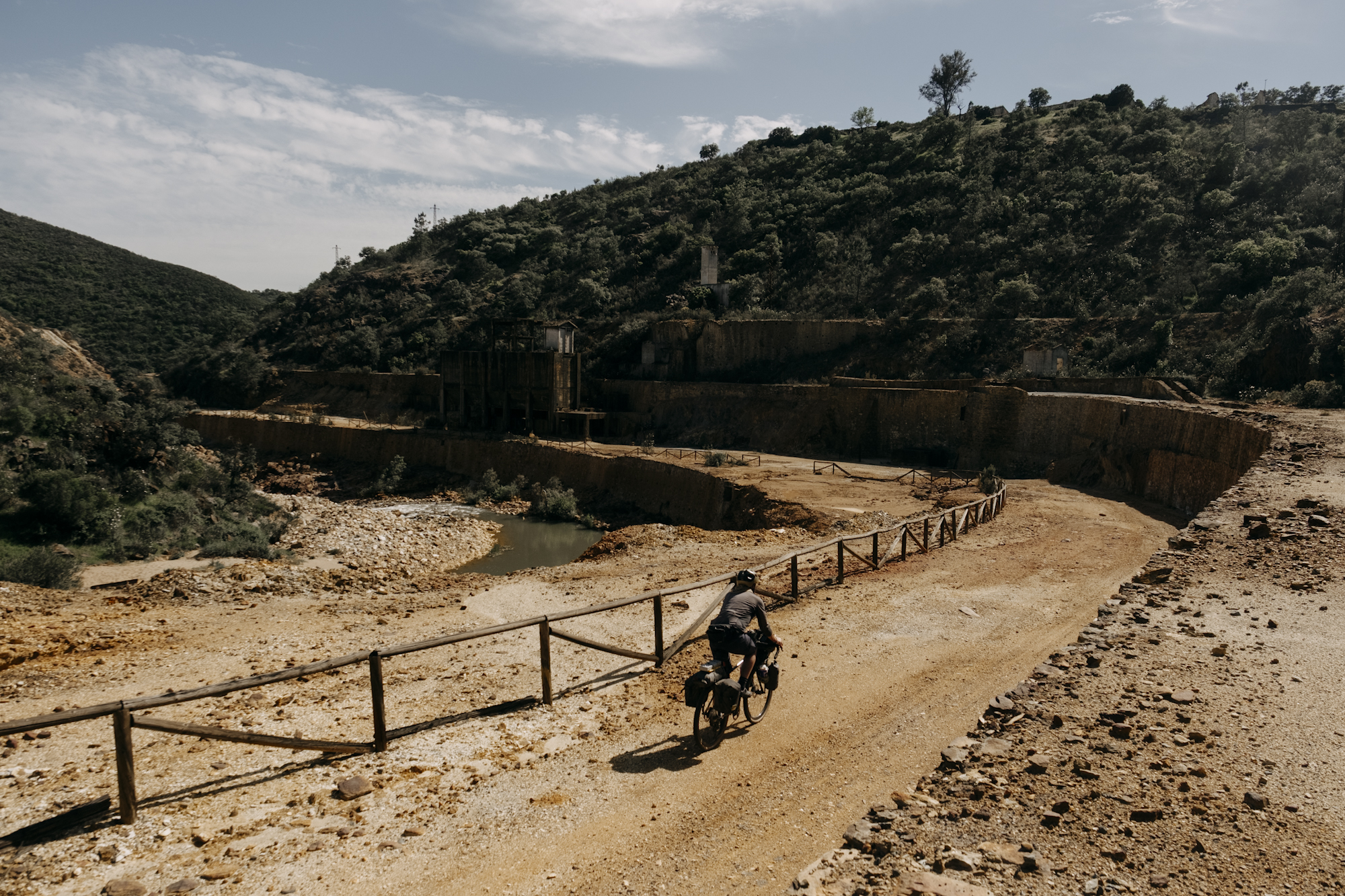
The landscapes changed completely once we entered the old mining region around Río Tinto. Suddenly the water turned red. Old railway bridges crossed rust-coloured rivers and abandoned industrial ruins appeared beside the trails. Everything smelled faintly metallic and sulphurous. As a historian I could easily have spent an entire day wandering around photographing details and trying to understand the layers of industry and extraction still visible across the landscape. Instead, we kept rerouting.
The route through Río Tinto became one of the most chaotic sections of the trip. Several planned paths were closed. Others simply disappeared beneath vegetation. One promising connection turned into an absurd mountain bike trail full of loose rock and steep punchy climbs. Normally it probably would have been fun. With fully loaded gravel bikes it became something else entirely.
At one point we found ourselves pushing uphill through a brutally steep fire road while staring at the village we needed to reach sitting calmly on the opposite side of the valley. I remember Javi eventually turning around and coming back downhill to help push my bike for the final section. Neither of us was angry. Mostly just tired. Later, sitting outside a small bar in El Campillo surrounded by people preparing for the evening bullfight festivities, the entire situation already felt funny again. That happened often during the trip. The difficult moments rarely stayed difficult for very long.
The Tiny Shovel
A few mornings later, somewhere beside the Embalse de Aracena, I finally used the tiny shovel we had bought before leaving Madrid. It turned out to be an excellent purchase. Nobody really talks much about these things when discussing bikepacking, but after several days riding in the heat your body becomes part of the logistics too. Hydration, food and digestion start affecting your mood almost as much as terrain or weather. That morning I remember returning to camp feeling strangely proud of our ridiculous little gardening tool while Javi calmly continued preparing coffee beside the tents.
Around us the reservoir reflected the first morning light while birds began making enough noise to wake the entire valley. A few hours later we were pushing the bikes through another rocky trail. That was the rhythm of the Angustias Tour. Moments of complete absurdity constantly mixed with genuinely beautiful landscapes.
Doñana
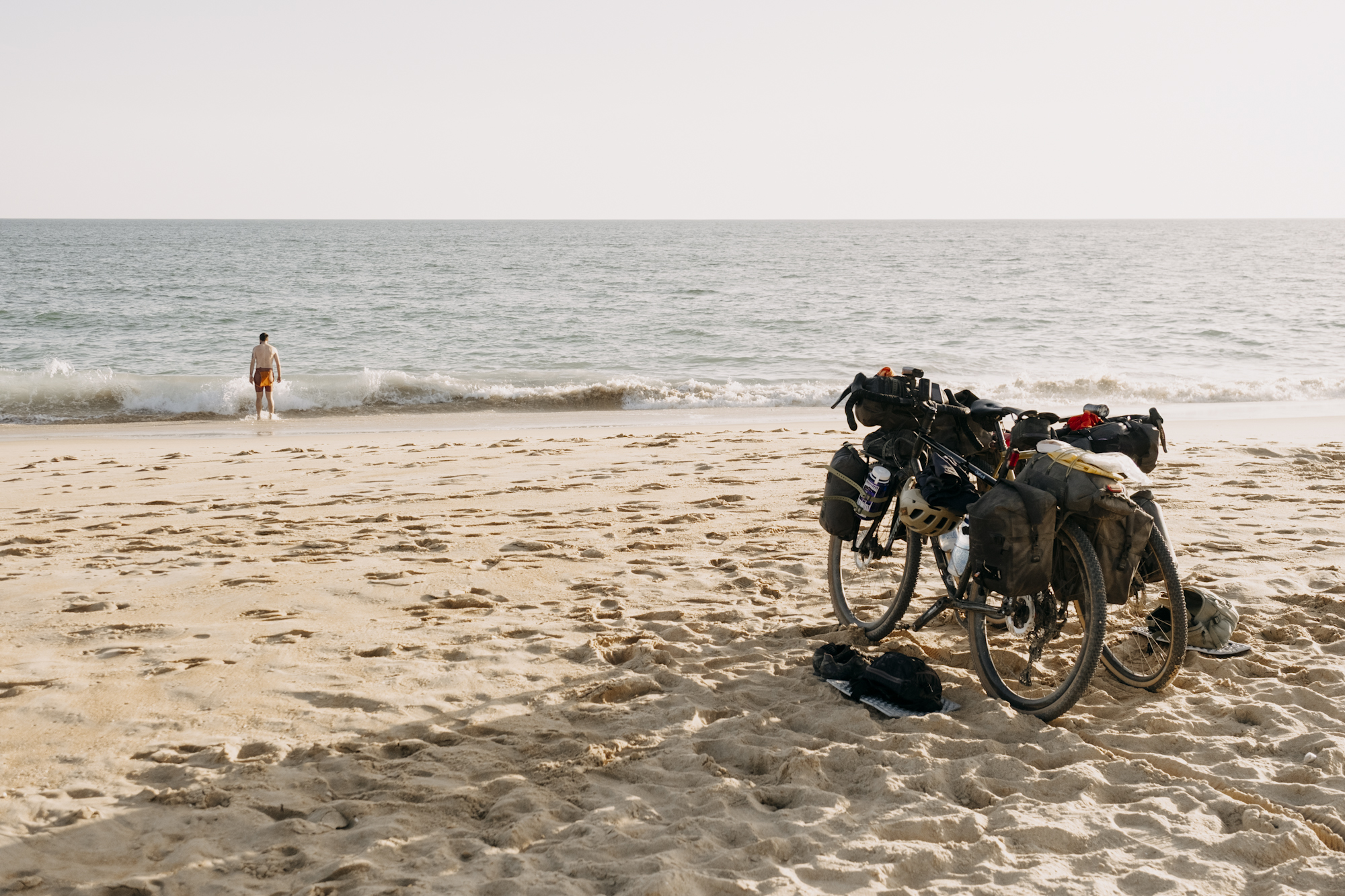
Crossing the beaches between Matalascañas and Sanlúcar de Barrameda became one of the defining experiences of the trip. We slept beside the beach under an unfinished chiringuito so we could start before sunrise while the sand was still compact enough to ride. Javi suggested skipping breakfast and eating once we reached Sanlúcar. I accepted immediately. That was a mistake.
The first kilometres were magical. The beach was completely empty except for birds and a few fishermen riding electric fat bikes near the shoreline. Flamingos moved through the distance while the Atlantic slowly brightened with the sunrise. Then the effort started accumulating.
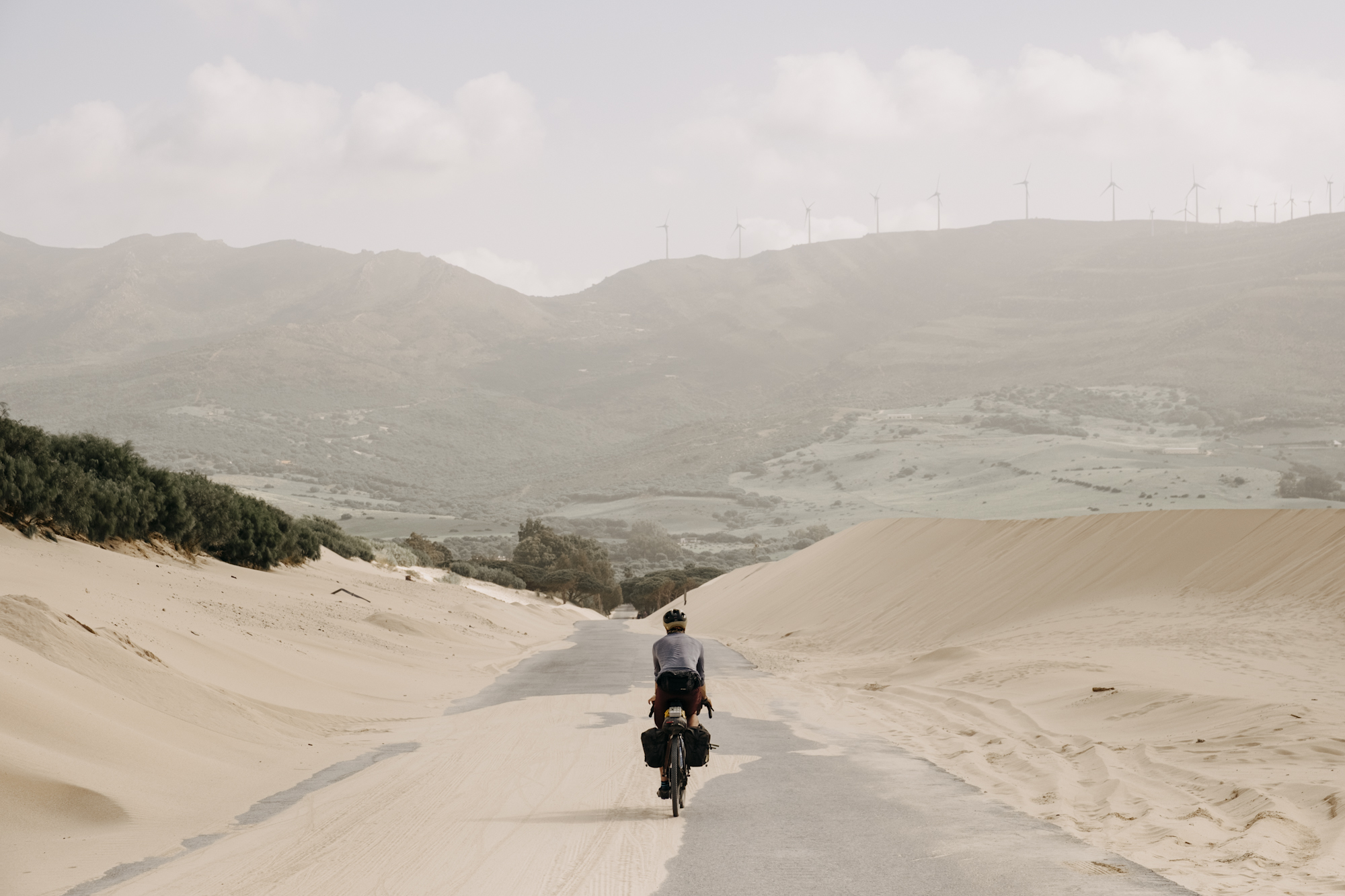
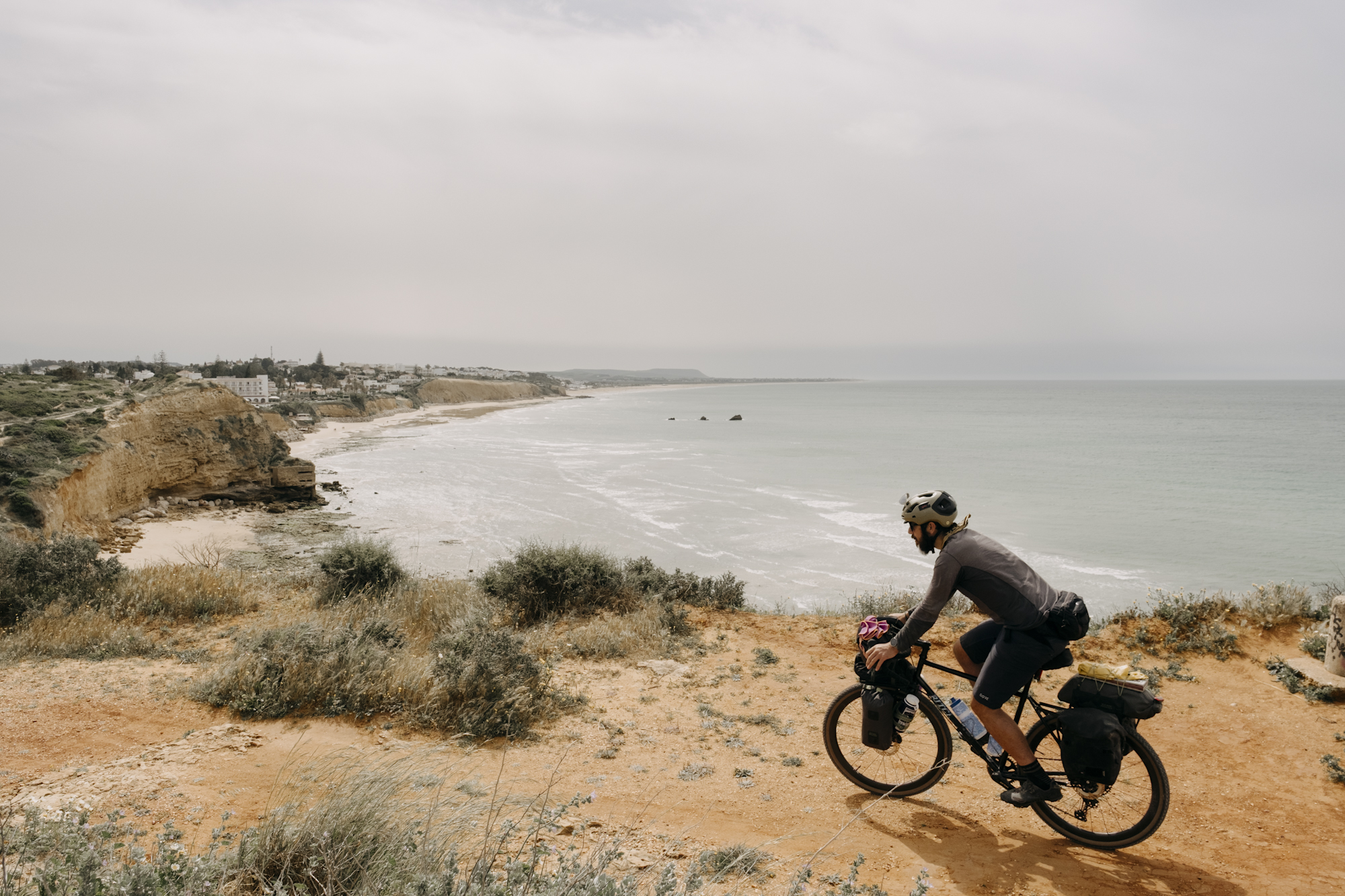
Loaded bikes sink quickly into soft sand, even with low tyre pressures. We managed to pedal all the way but that sand sucked all my energy and we had to stay close enough to the waterline to find firmer ground, knowing that salty water isn’t a good friend with metal bikes. At one point Javi casually mentioned that we still had more than two hours left. I immediately regretted hearing that information. Sometimes ignorance is useful. Fortunately the landscape kept interrupting those thoughts. The beach felt strangely empty and enormous. Occasionally a Guardia Civil vehicle or maintenance truck passed us in the opposite direction, otherwise there was almost nobody around.
There was also far more plastic than I expected. We spent part of the morning complaining about how sad it felt seeing such an extraordinary place covered with bottles, fishing gear and random debris washed ashore by the Atlantic. Then I found a brick-shaped package lying half-buried in the sand. It turned out to be hashish, probably thrown overboard by one of the countless smuggling boats operating through the Strait. We took a couple of photos, laughed about accidentally increasing the total weight of the bikes and left it exactly where it was.
By the time we finally reached Sanlúcar I was completely empty. The combination of heat, effort and not eating properly caught up with me later that afternoon. That became another lesson from the trip. Small mistakes accumulate slowly.
Cádiz
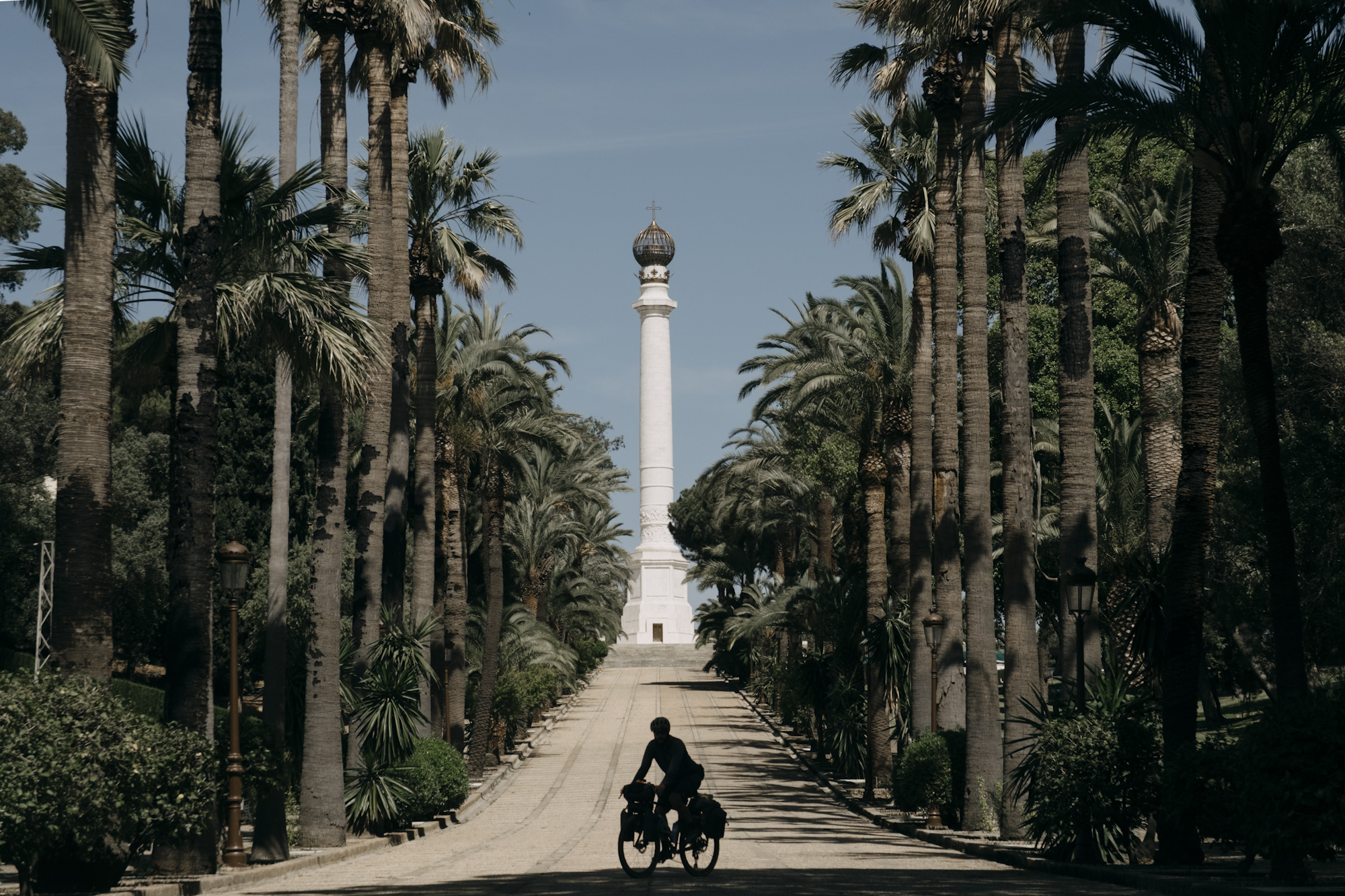
The closer we moved toward Cádiz and Tarifa, the stranger the landscape became. One moment we rode through beautiful natural areas beside estuaries and salt flats. The next we found ourselves beside oil infrastructure, industrial ports, tourist urbanisations or endless golf resorts. At times the route felt almost contradictory. Beautiful bike paths crossed through places that also felt heavily altered by tourism and development. Around Doñana we rode between military zones, beach towns and protected natural areas where signs constantly warned drivers about lynx crossings.
The farther south we travelled, the stronger the Atlantic wind became. One morning leaving San Fernando we could barely hold ten kilometres per hour despite riding on completely flat terrain. The wind made the bikes feel as if we were climbing. At other moments the route became surprisingly easy. Long sections of bike path carried us quietly between pine forests, dunes and small coastal towns while we talked without paying much attention to distance or speed. By then we had already settled fully into the rhythm of the trip. Javi adjusted bolts whenever something began creaking. I constantly tried to keep cameras clean from dust and salt. Every few hours we searched for water again.
One afternoon near Costa Ballena I finally reached a point where my body simply stopped cooperating. The heat, lack of breakfast and accumulated fatigue suddenly caught up with me all at once. I told Javi I needed to stop. We found a small patch of shade beside the beach and I improvised a tiny shelter using the tarp I normally carry beneath my sleeping mat. I collapsed underneath it while Javi went swimming. I have no idea how long I slept. But when I woke up I felt human again. That small reset probably saved the rest of the day.
Tarifa
Our final morning together began beside Playa de los Alemanes after a night of humidity, mosquitoes and light rain. Javi had decided to sleep only under the mesh inner of his tent. I had fully pitched mine because the clouds looked suspicious. At three in the morning I heard him scrambling outside while rain hit the fabric of my tent. The next morning I asked if he regretted not mounting the flysheet. “Not really,” he answered. “I just put it up and went back to sleep.” That response felt very Javi.
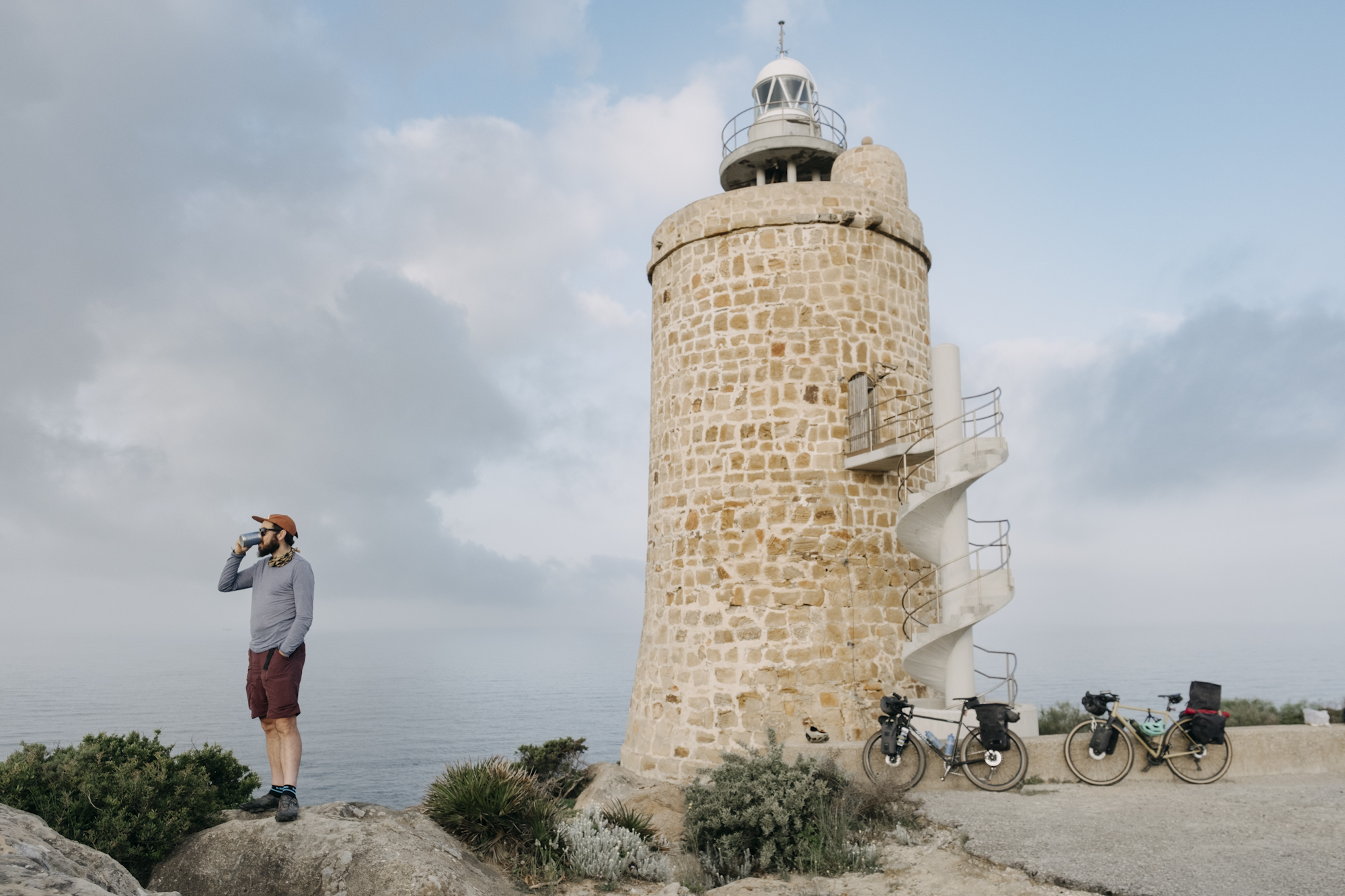
We rode toward Bolonia through low coastal fog while the tents dried on the bikes. Near the Faro del Camarinal we stopped for breakfast while construction workers quietly began their own day nearby. Later we passed the Roman ruins of Baelo Claudia, crossed the dunes of Valdevaqueros and eventually reached Tarifa itself. The town felt busy, bright and slightly chaotic after days sleeping outdoors.
Javi wanted to meet Ramón, a local cyclist friend we both knew from previous adventures, so we spent part of the afternoon wandering through town eating pastries and waiting for him to return. Eventually Ramón arrived and what should have been a quick greeting turned into a long conversation about routes, bikes, races and future ideas. That also felt like part of the trip. Cycling constantly creates these strange temporary overlaps between people, places and projects.
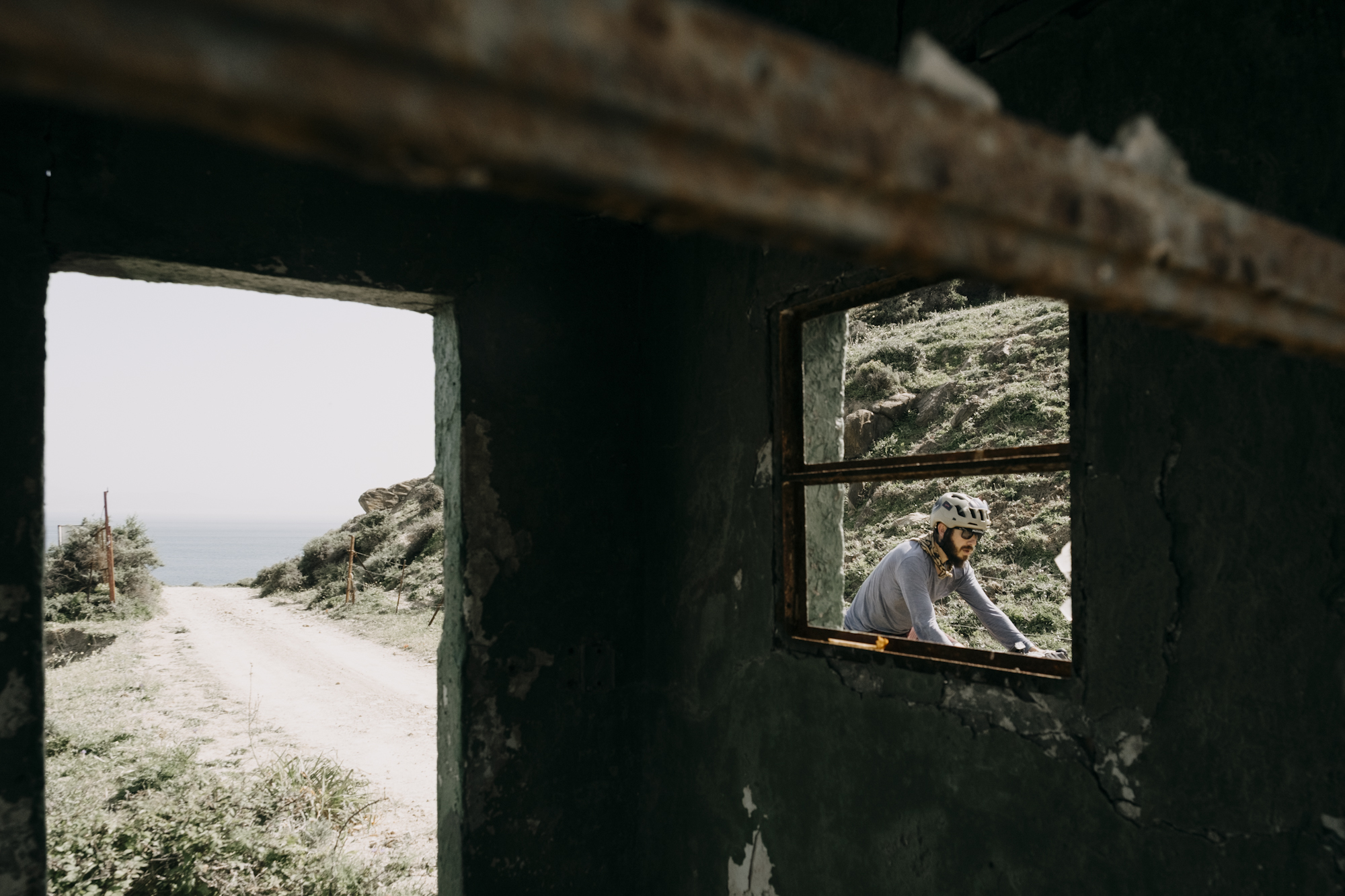
Later that afternoon I accompanied Javi a few kilometres farther south of town before our routes separated. We climbed slowly through an abandoned military area filled with old bunkers, tunnels and wandering cattle while looking for the entrance to another dirt road leading toward the Parque Natural de los Alcornocales. At the final junction we stopped. Javi would continue scouting the future Linking Peaks route toward the mountains. I needed to return to Tarifa, sleep in an apartment for the night and catch a bus toward Málaga the next morning.
Before leaving I climbed onto a small rise beside the road and took one final photograph of Javi descending through a series of dusty bends. That became my last image from the Angustias Tour. Then I turned around and rolled back toward Tarifa alone. Suddenly the bike felt strangely light again. Not because the bags weighed less. Just because the trip was over.
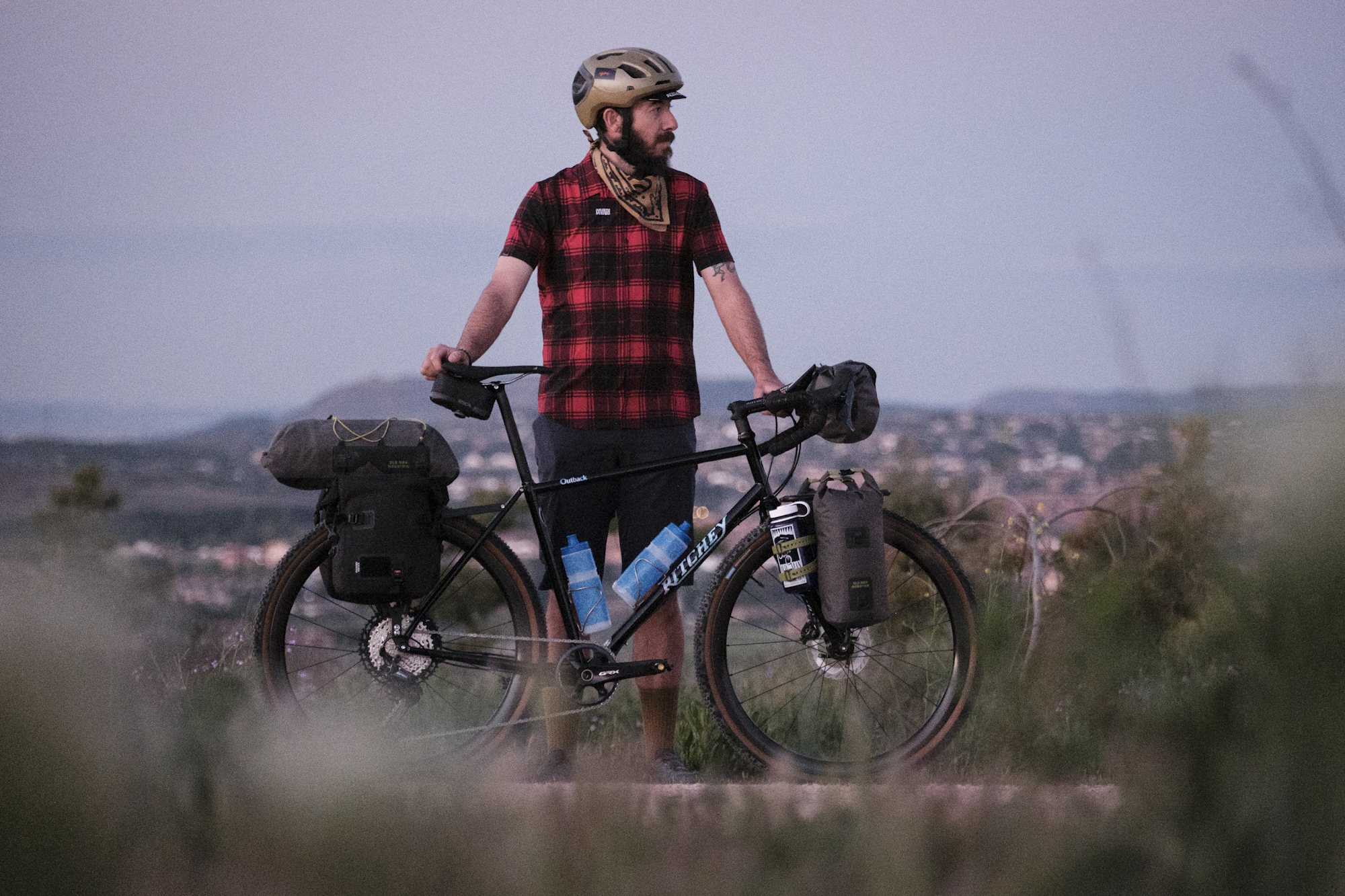
Follow Javi on Instagram @xinolugo
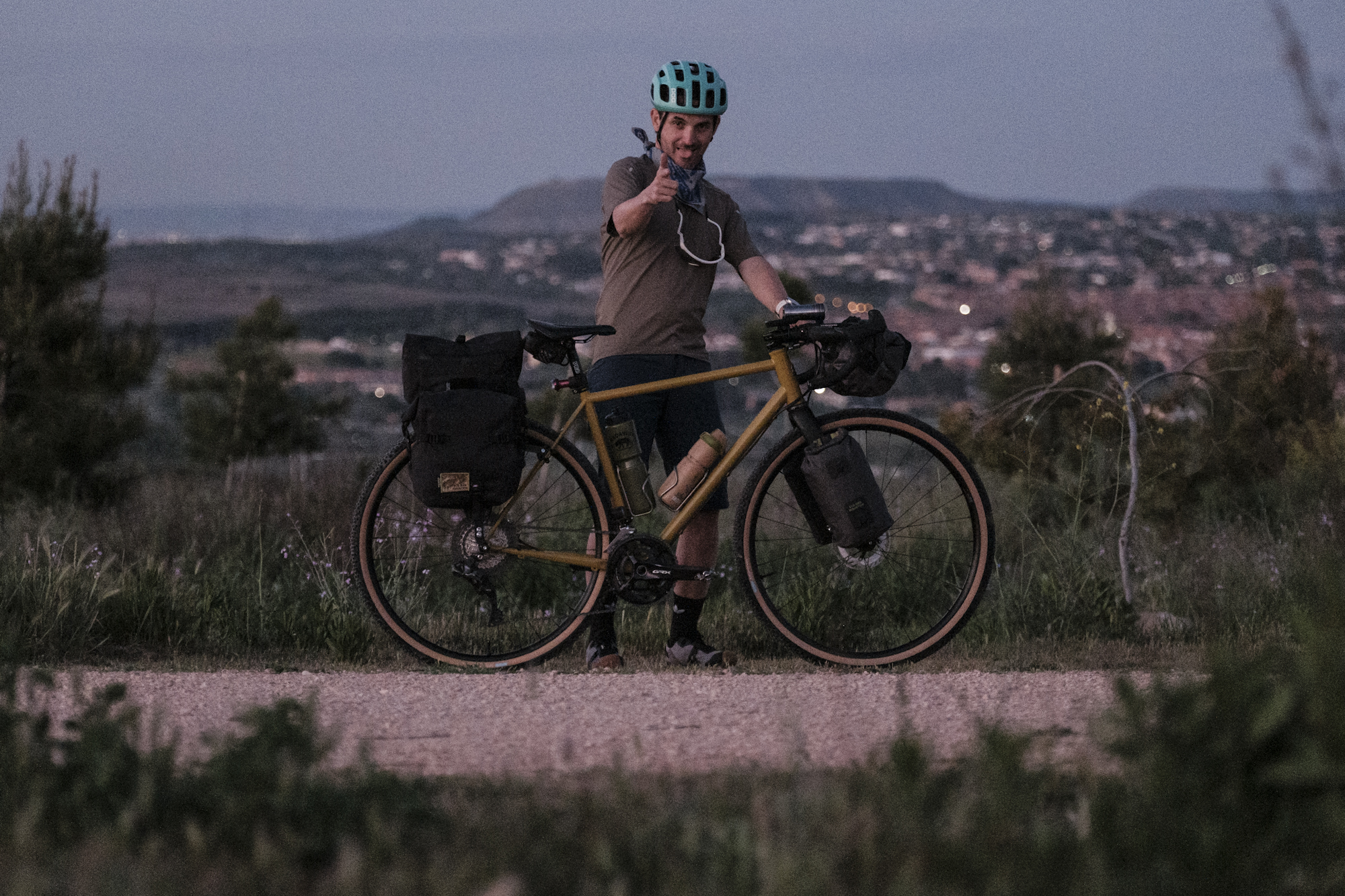
Follow Tomás on Instagram @arrieredupeloton
Leave A Comment