
May 21, 2026
Words and Photos by Lorenz Eimansberger
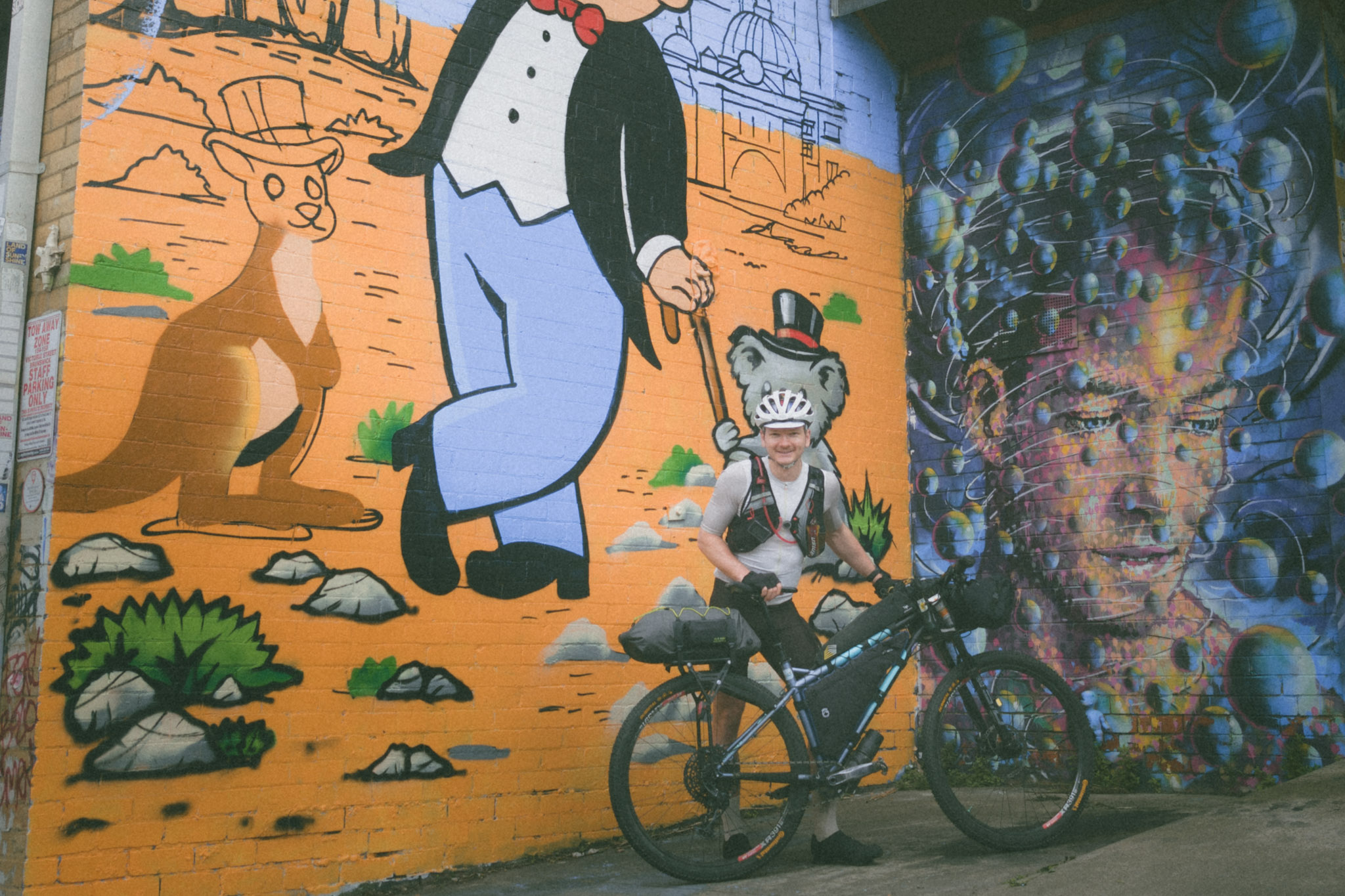
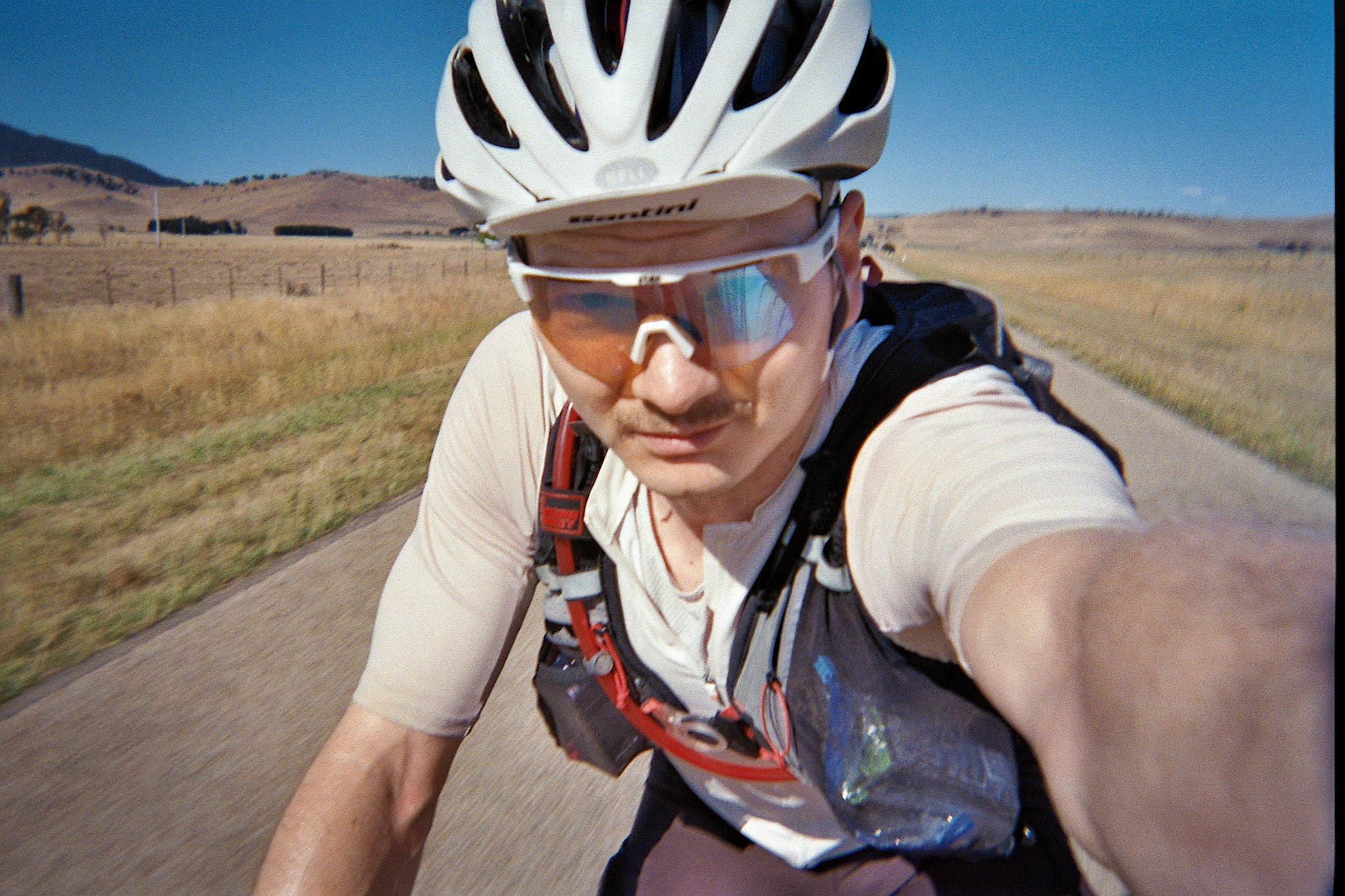
I came to Australia in February 2026 to visit my brother, whom I hadn’t seen in six years. But since I had some extra time on my hands, I decided, why not cycle to meet him?
The Hunt 1000 is one of Australia’s most famous bikepacking routes, running from Melbourne to Canberra along the Great Dividing Range. The official event takes place in November, but I decided to take it on solo in the February heat. My brother was in Mildura for work, so the plan was to follow the Hunt 1000 into the mountains and then, after Cabramurra, divert westward and follow the Murray River to meet him. I grew up in Germany, though I’d most recently been living in Austria (the one without the kangaroos). I’d done plenty of bikepacking in Europe – both touring and racing – but Australia was new territory for me: bigger, hotter, and if you believe the stories, actively trying to kill you.
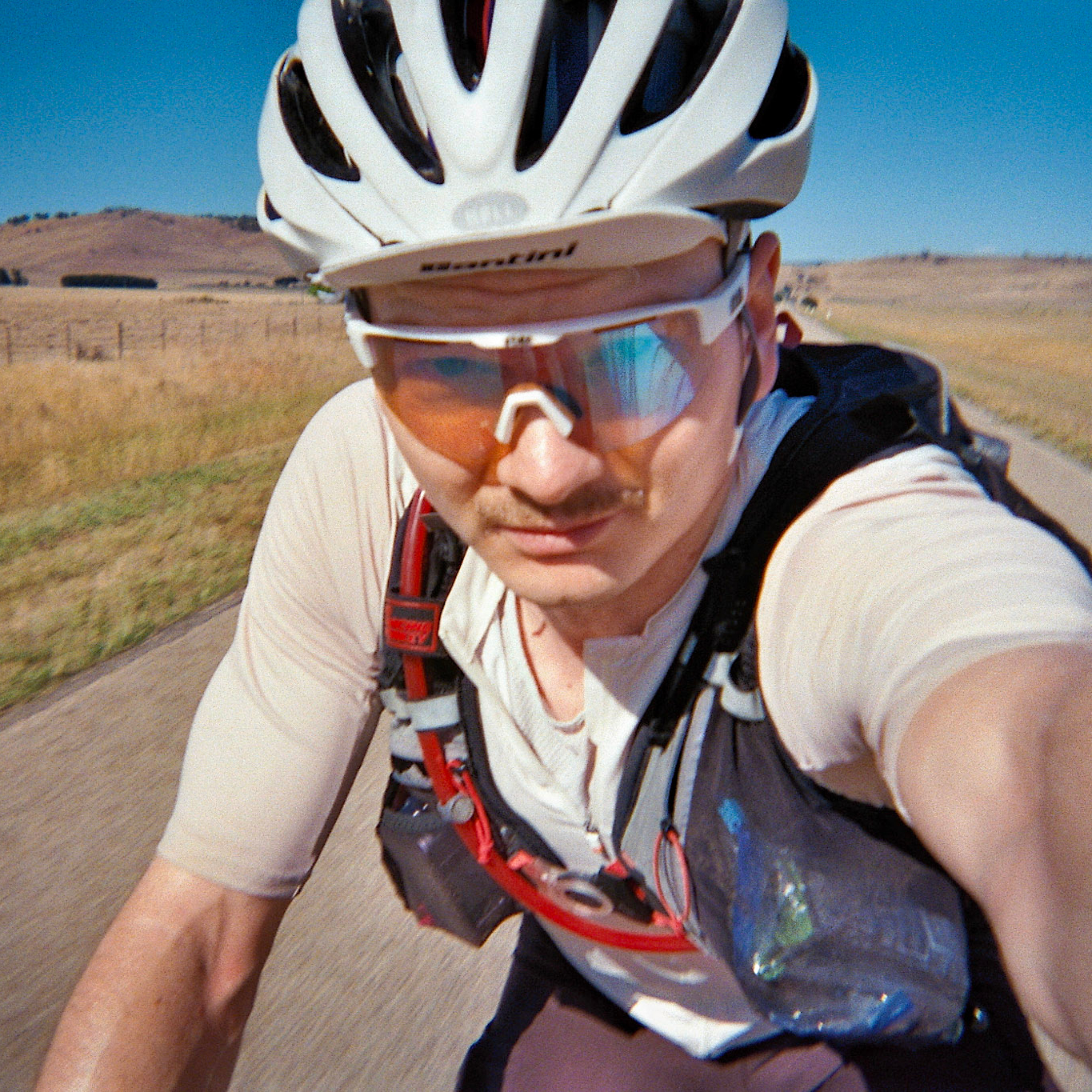
Lorenz Eimansberger
Guest Contributor
Into The Green
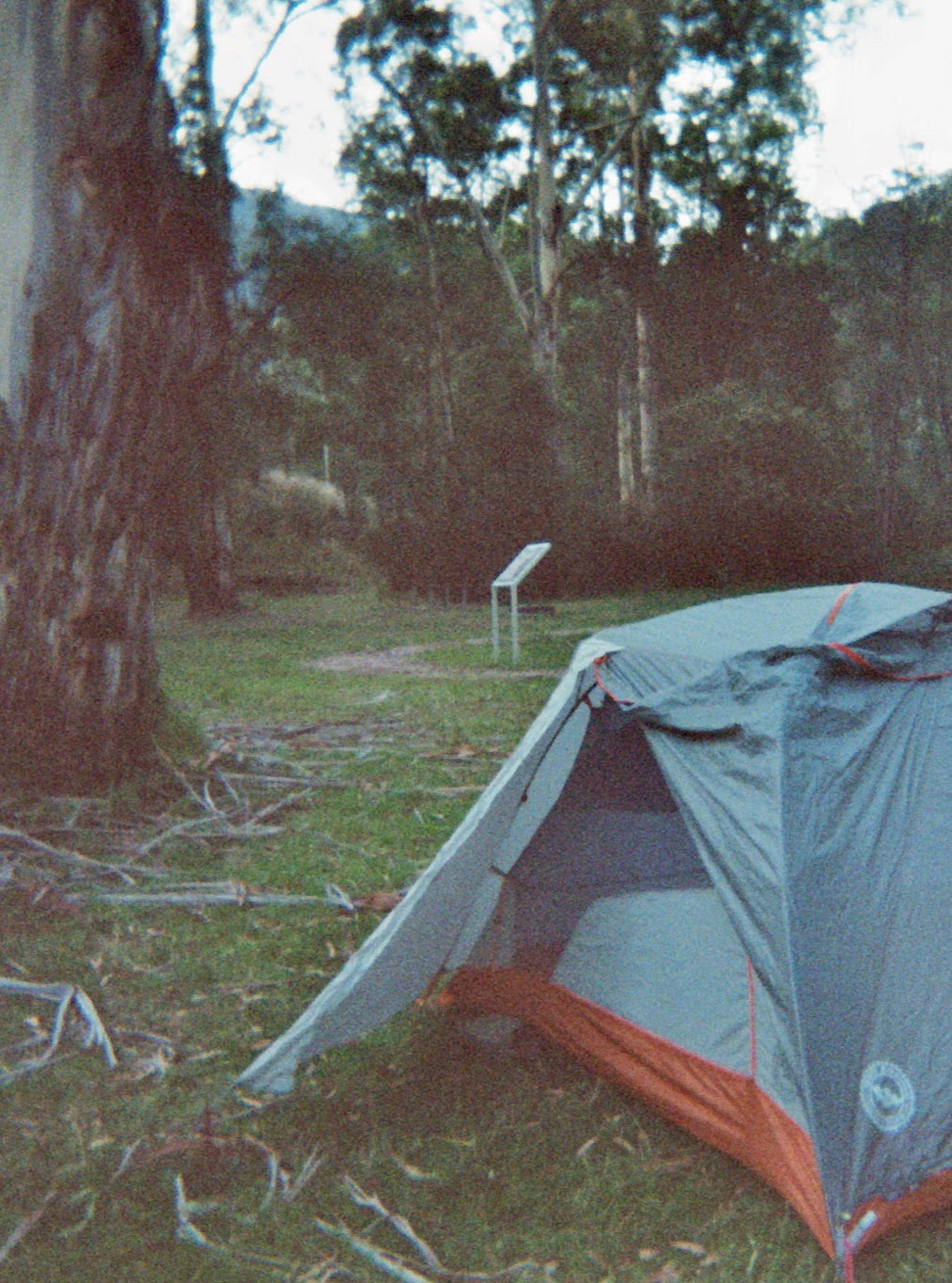
After a few days in Melbourne, the first 50 kilometres of cycling led me out of the city’s suburbs along the Yarra River, easing into a rhythm. The first proper climb, into the Dandenong Ranges, surprised me with a lush, green forest, looking little like the Australia I’d pictured. Palm trees and ferns, almost tropical. Not the arid, sun-burned continent of European imagination. After the climb, a long rail trail opened into rangeland and cow pastures. In Warburton, an old railway town, I chatted to a few other loaded-up cyclists, their panniers bursting with beers and snacks and clearly on a different mission than me. I slept at an official campground, where the car of the couple next to me honked and shone its lights right onto my tent every time they unlocked it. Which, conveniently, they did about 20 times just as I was trying to go to sleep.
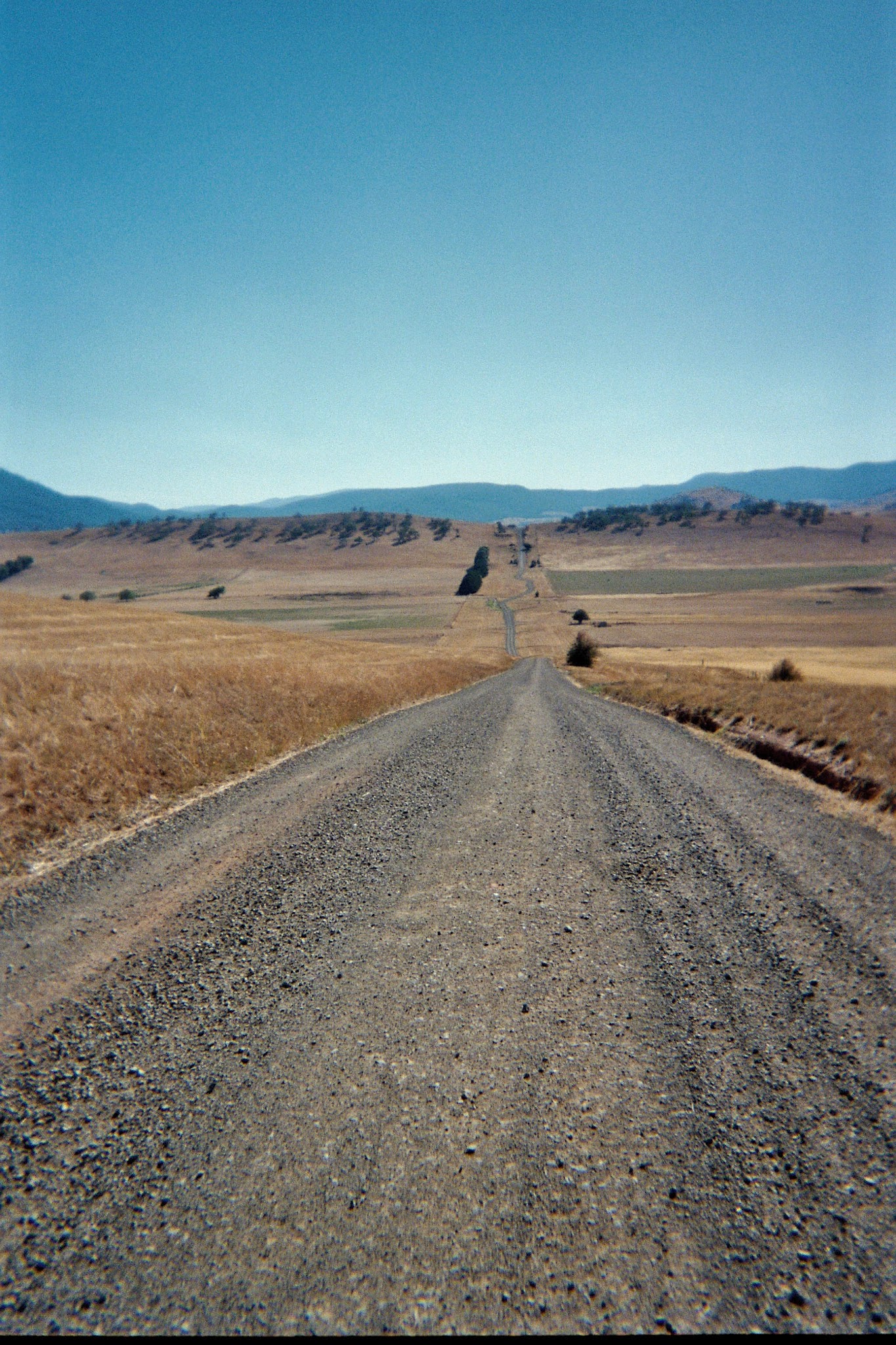
The next morning I started on a road climb where I was determined not to get dropped by a group of MAAP-ed out roadies. I somehow managed, but parted ways with them when the tarmac gave way to gravel. Here, the forest in parts was charred – which I suspect was from the recent wildfires, having still burned just a few weeks prior. The road was desolate; I didn’t see a single car for hours. A feeling I would get used to in the next few days. In Woods Point, a tiny village bustling with 4x4s and motocross bikes parked at the pub, the shopkeeper warned me that the store in Licola, the next village on the route, had shut down. The whole settlement was apparently up for sale. I bought an extra tin of beans and some gummies and stuffed my frame bag beyond its intended capacity.
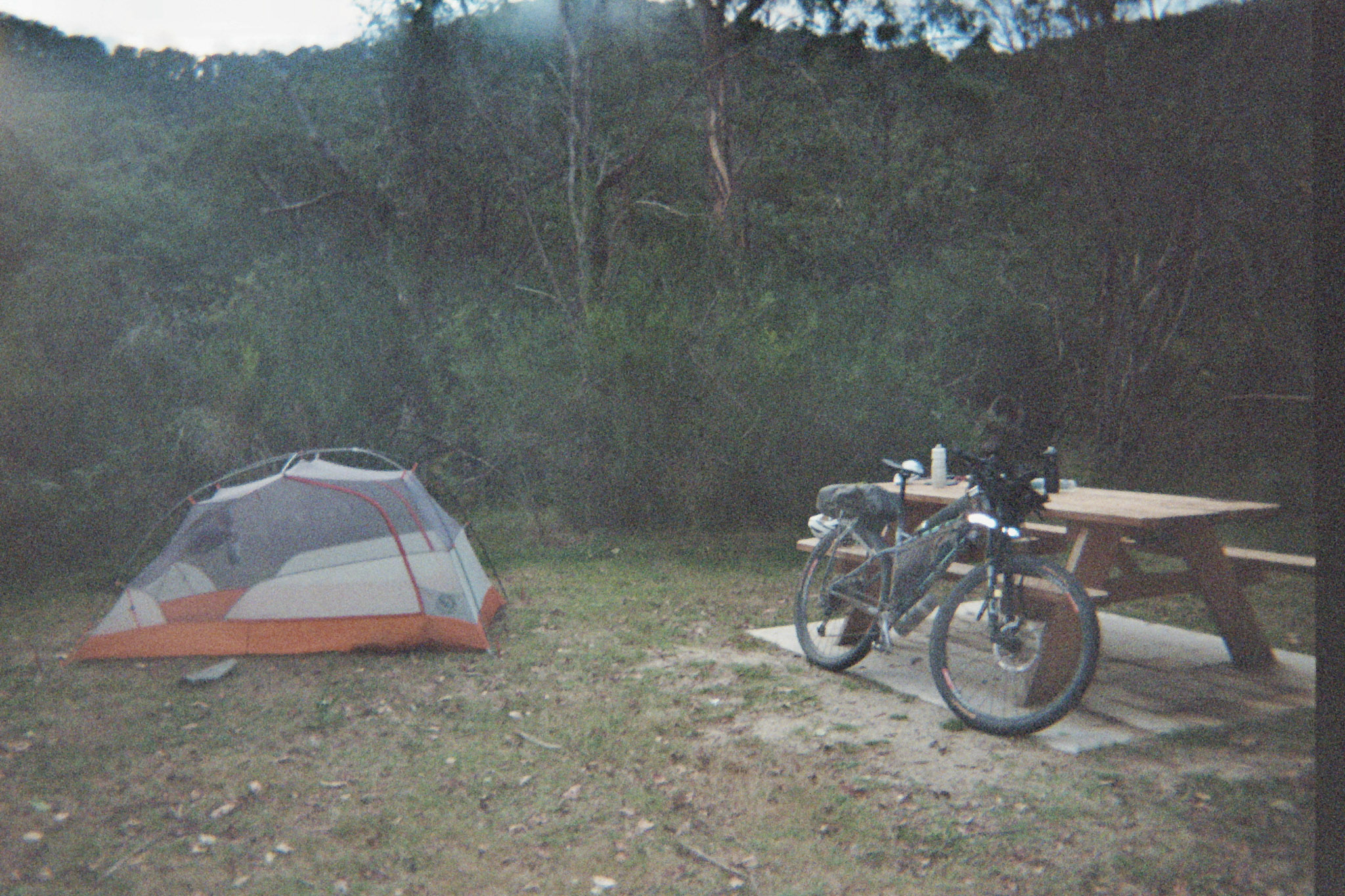
Then followed four or five river crossings in quick succession, probably a sign that I had lost my way and a brutal climb in the baking sun, the first time I had to properly fight. I was grateful for the heat training I’d done back home, riding the indoor trainer with extra layers, turning the apartment into a sauna while sweating so much my clothes needed wringing afterwards. In Licola I asked some off-roaders whether they thought I could still attempt Billy Goat Bluff track, which was closed due to wildfire damage. “If you’re not 100% sure you can get through, don’t.” After a bit of contemplating, I decided to follow their advice – after all most of the roads in that area were still closed and the wildfires were not far behind, but that meant I would have to divert quite a bit. By the time I reached the campsite twenty kilometres past Licola, I’d covered 165 kilometres and 3,500 metres of elevation. I bathed in the icy river, and ate a double helping of rice and beans. On the campground toilet, a redback spider sat calmly on the underside of the seat, looking as though it had been expecting me.
Scorched Earth
The next morning I took it easy, since the detour meant I’d skipped some mountains and there was no time pressure. I descended to a lake on smooth tarmac in beautiful morning light, then resupplied in Hayfield before heading onto farm roads toward the Dargo Highway. The detour turned out to be beautiful, a narrow road alongside a creek, and I started climbing. Ignoring another “Road Closed” sign to avoid extra climbing, I spotted some kangaroos and a big lizard, and pushed through to Dargo. Again, I found the store to be closed, and was grateful to have resupplied back at the gas station earlier. At the campsite at Two Mile Creek, kangaroos watched me curiously, while I apparently used their favourite spot on the river to bathe. Right before sleeping, I found a spider the size of my outstretched hand on a tree right next to my tent. I photographed it and fed the image to my trusty AI, which cheerfully confirmed it was a harmless Huntsman, which made me rest a little easier.
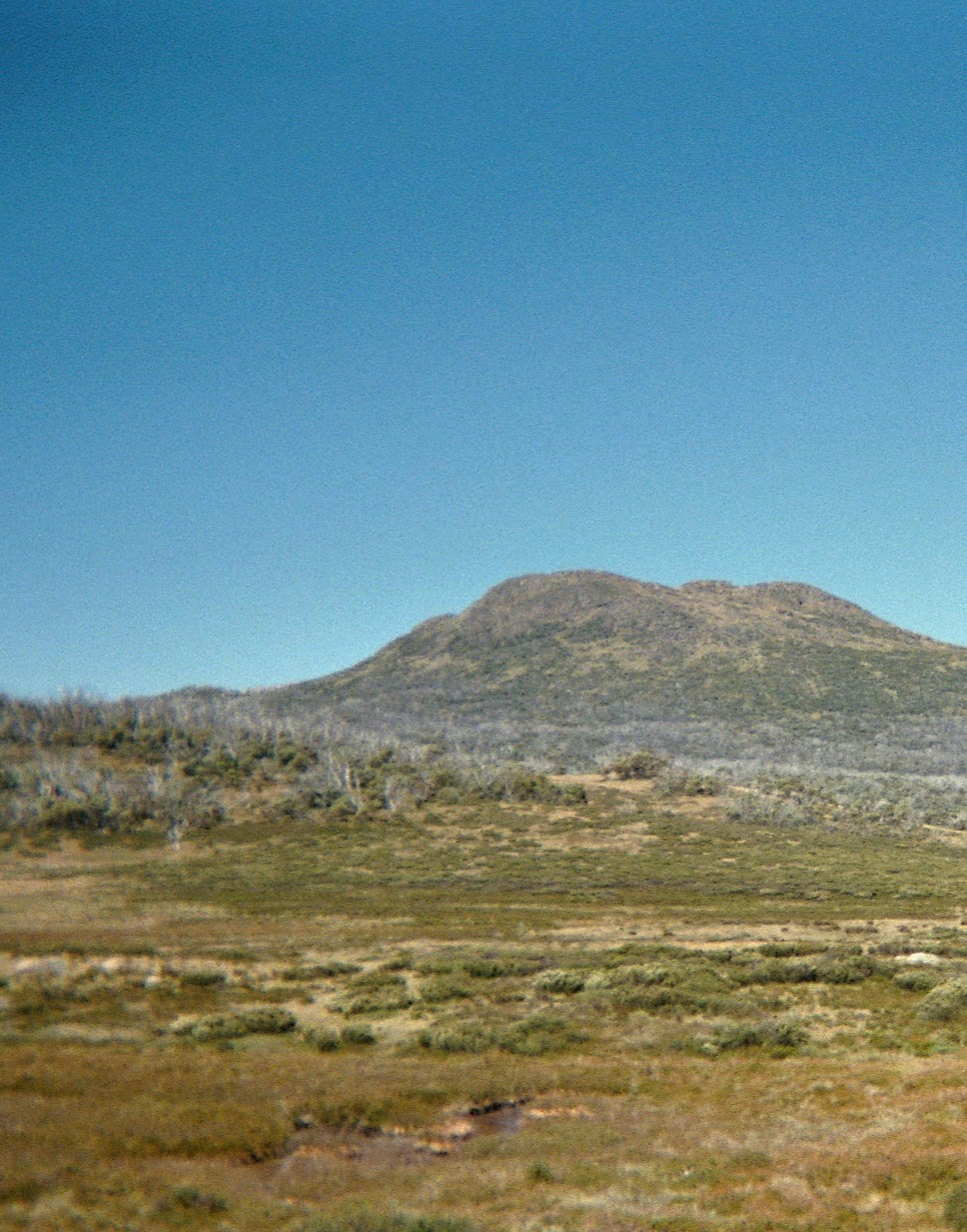
Then at 1am, a loud “POP” woke me. An inner seam on my sleeping mat had failed. I let air out to stop more chambers from going, and spent the rest of the night on the ground, hip pressing into dirt, dreading how cold the nights ahead would get at altitude. The next day meant a 3.5-hour climb into the Alpine National Park, through what I can only call a graveyard for trees, entire hillsides of skeletal eucalyptus, standing like sad monuments to the destructive power of fire season. Blackened trunks against a blue sky, the scenery eerie and magnificent at the same time. I finally reached the Great Alpine Road which was indeed – great – and had a late lunch at Hotham, one of Australia’s Ski Resorts.
I rolled into Omeo by late afternoon. The outdoor store was closed, but I called the number on the door, and the woman was kind enough to meet me there at six to sell me a mattress. Bulky, cheap, and the most welcome purchase of the trip. In the pub, I celebrated with double fries, a few Carlton Drys, and my first proper meal in days. I texted my brother a photo of the beer. “What’s your opinion on Carlton Dry?” I asked. Not even a minute later, he replied with a photo of his own Carlton Dry – from a can, while mine was draft. “Not too bad,” he replied. Being in the same timezone after 6 years seemed to slowly get us in sync.
The High Country
With my bar bag bulging thanks to the new, less “ultralight” mattress, I headed back into the mountains. My knees were twinging a bit, but luckily this was a relatively easy day. On a narrow dirt road, a large two-carriage truck carrying a digger barreled past me and I had to jump to avoid it, leaving a dust cloud so dense I had to wait a minute for the air to become breathable again. The track turned wilder and more remote, and into a long steep descent with natural jumps and features. This was awesome riding with the dropper post down! I almost think the route was made to be ridden in this direction after all. I crossed the Murray River into NSW wading through waist-deep water and made camp at Geehi Flats – my favourite campsite of the trip with its crystal clear river and serene forest surroundings.
The day broke humid, with overcast skies with a group of kangaroos wishing me farewell as I set off from camp. Over 3500m of altitude was on the menu. I ground steadily upwards past Geehi Dam and towards the Jagungals, gaining altitude in a slow, meditative rhythm. Then, stopping for water, the day took a turn. My right pedal cleat had jammed. I had to take my shoe off to fix it, hopping around on one foot. When I turned to fill my bottles in the creek, I nearly stepped on a snake. About a metre long, glistening black with a lighter-coloured face – fitting the description and habitat of a highland copperhead perfectly, which is to say, one of the more venomous creatures on a continent that specialises in venomous creatures. I started shouting and stomping on the ground, but the snake just looked at me, unafraid, before quietly slithering away. The European fantasy of “everything in Australia is trying to kill you” had, in this moment, proven entirely accurate. I did not fill my water there.
Still, in retrospect I have to say that these encounters are rare. In terms of venomous animals I saw only one snake and one redback spider in 10 days. The most noticeable wildlife was the birds, the cockatoos especially. While I often found their screeches a bit too loud and unmelodic, upon reflection, their noise is the sign of an intact ecosystem. And in general, the fauna feels just a lot more present in Australia, which makes cycling all the more interesting.
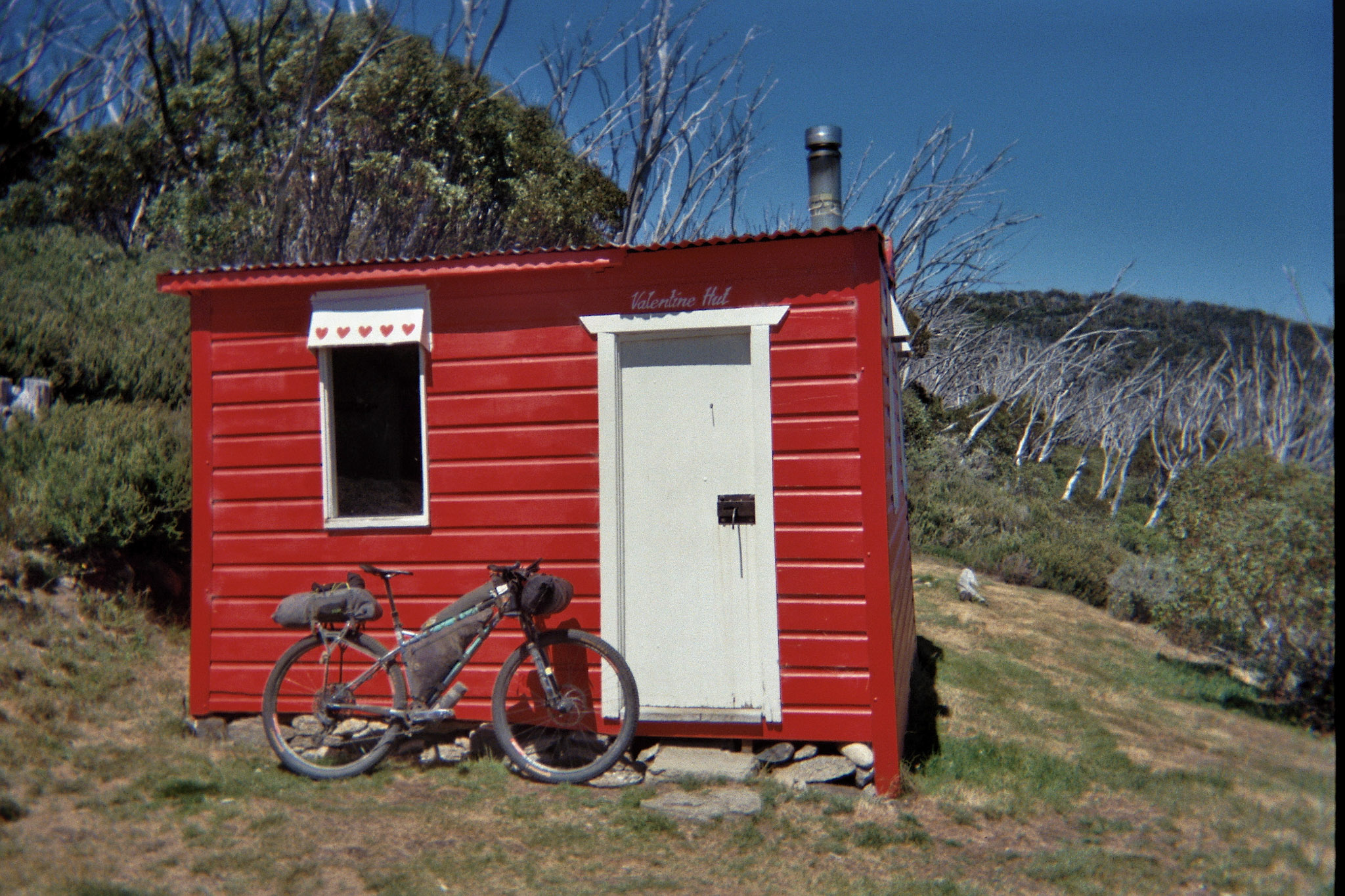
I stopped at Valentine’s Hut around midday, painted red with hearts, a self-service backcountry shelter with bunks. There are quite a few of these huts scattered along the Hunt1000 route, but my planned sleep stops and pace didn’t match with any of them. The Jagungals were wild, rugged and extremely windy, but easily some of the best riding of the whole route. I pushed on, hit tarmac again, and climbed to Cabramurra, Australia’s highest town. I’d been obsessing over the bistro there for the past two days. Being a company town, a sign on the door said they don’t serve visitors for dinner anymore, but they served me anyway. I had beef ribs, mash and dessert, which helped to make me feel human again. Only after setting off again, I realized I’d been so focused on eating and having signal again that I’d forgotten to dump my rubbish. I’d been carrying a load of trash for over 200 kilometres and would have to carry it over 100 more.
Heat And Human Kindness
Ironically, day 7 was the one where I was cold for the first time – in the morning and overnight – but which turned into by far the most scorching once afternoon rolled around. I departed the Hunt1000 route westwards, descending via the Elliot Way. I had relied on a resupply at an inn called “Tooma”, but of course it was closed when I got there. With only two muesli bars and no water, I knocked on the only neighbour’s door instead. The man who answered looked at me curiously and despite my sunburned and filthy state, invited me in. We had a bit of small talk; as it turned out, he’d worked in Germany for years, and seemed in no rush to get rid of me. It made me reflect on what remoteness does to people. The more isolated and harsher the environment gets (this region for instance was going through a big drought), a kind of baseline solidarity is created between people. You help because everyone out here needs help eventually.
After a grueling segment of no shade and stinging sun, spiced up by the terrible smell of decaying roadkill, interspersed every 100 meters, I reached Jingellic. A kind of green oasis on the river Murray, which I had crossed earlier on foot, but by now was 50 meters wide. I sheltered there from the heat, talking with the shop owners for a while. That day I rode just twenty more kilometres and made camp before five, the earliest stop of the trip. In the evening, a massive flock of hundreds of birds settled in the trees above me and produced the kind of sound that had me torn between being awestruck at nature and wanting to file a noise complaint. Just as I finally drifted off, a possum in the tree next to my tent started producing a deeply unsettling guttural snarl, resembling a demon trying to clear its throat. I shouted at it and stuffed in earplugs. When I woke up, I found my pots and pans scattered across the ground. The possum, it appeared, didn’t like being yelled at.
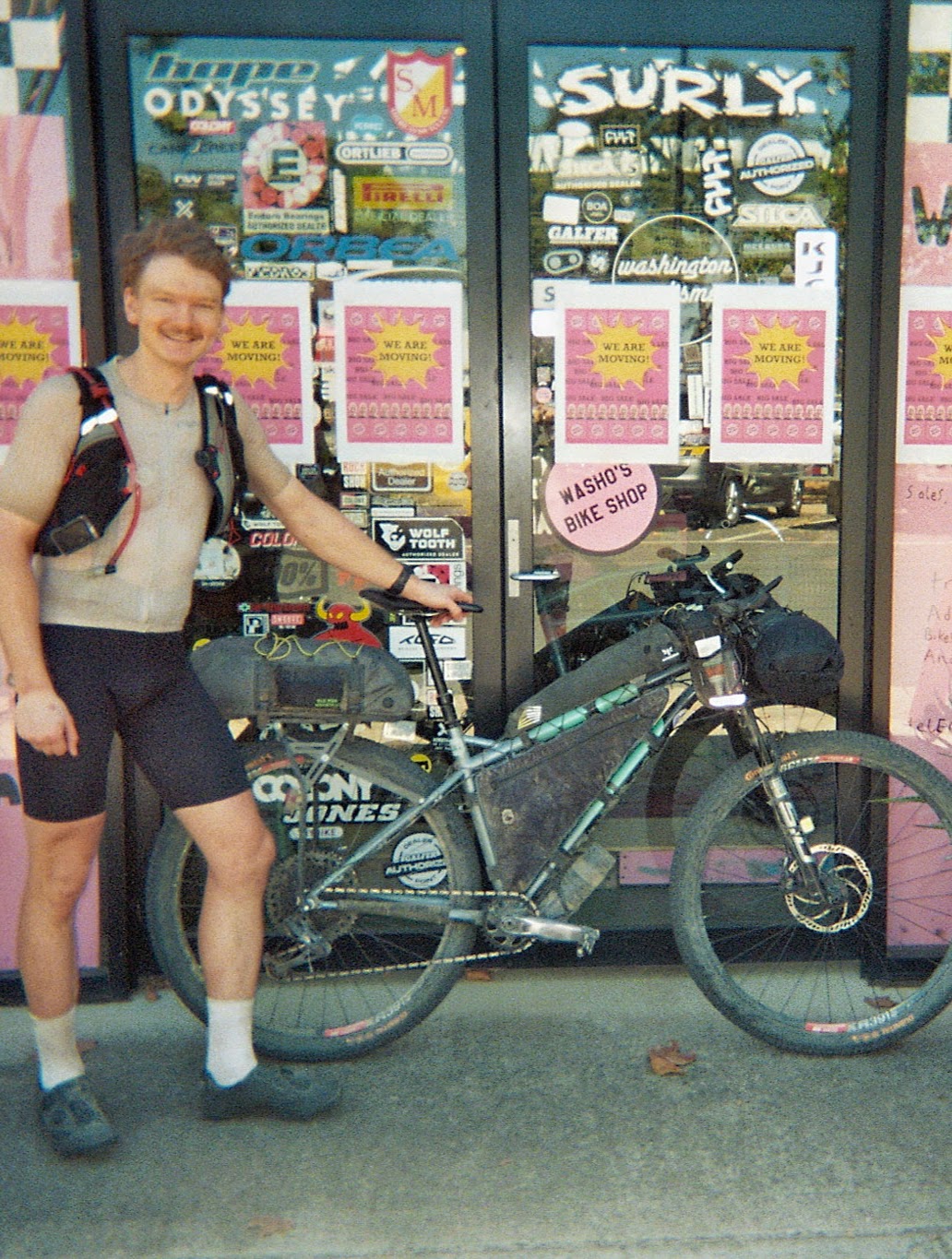
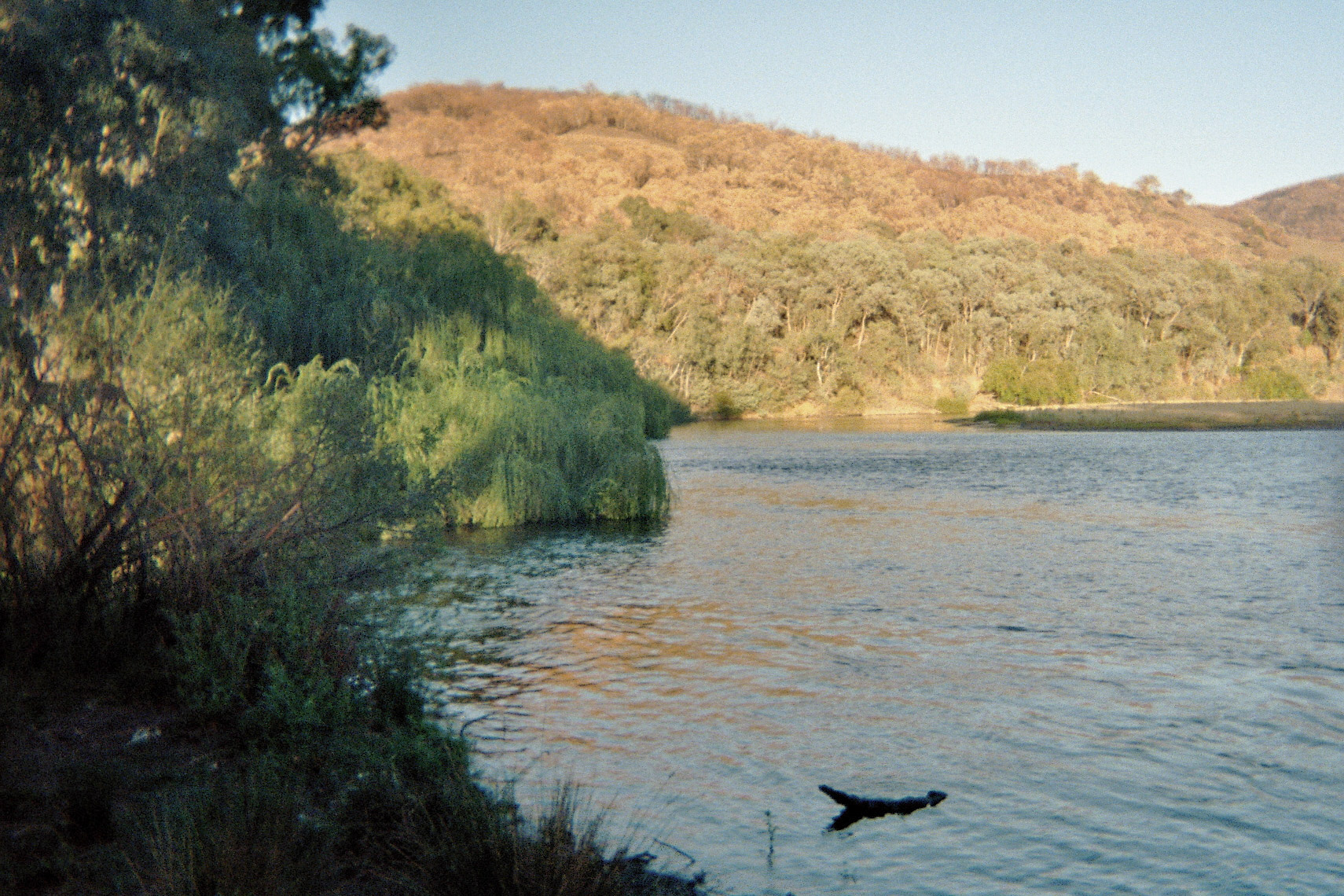
The next day I rolled into Wodonga, where a bike shop owner and Bombtrack dealer called Washo fed me donuts and made coffee for me. It felt good to socialise after spending a week in the bush. I had planned this stop since the beginning, and initially planned to take public transport from there. But instead, I decided to just follow the Murray river west and see where I would end up by Sunday. Australian cities, I should note, are not the most bike-friendly in the world. After days of empty mountains and creek crossings, the suburbs of Wodonga in 38-degree heat felt almost hostile. Eventually I found gravel again, and reached Lake Mulwala during a spectacular sunset – the best of the trip. I set up camp on a small peninsula and went to sleep, wondering if I’d ever have a proper shower again, or if bathing in rivers would just be my new normal.
The End of the Road
From Mulwala I rode via Tocumwal and into the Murray Valley National Park, where things got a bit unhinged. I didn’t see a human for hours and got disorientated in the dense forest. I hit several road closures and at one point had to carry my bike over a construction site to stay on track. The heat was blistering, above 38 degrees, and my decision-making started to deteriorate in the way it does when dehydration meets exhaustion. I eventually found my way to Barmah, bought overpriced supplies at a gas station, and set up camp at a spot that was more like a compromise than a highlight, but by this time I couldn’t carry on any longer. Rubbish and glass shards everywhere, a very muddy river that made washing a challenge. To make matters worse, the nightly temperatures were 25 degrees minimum, with no breeze, so I did not sleep at all.
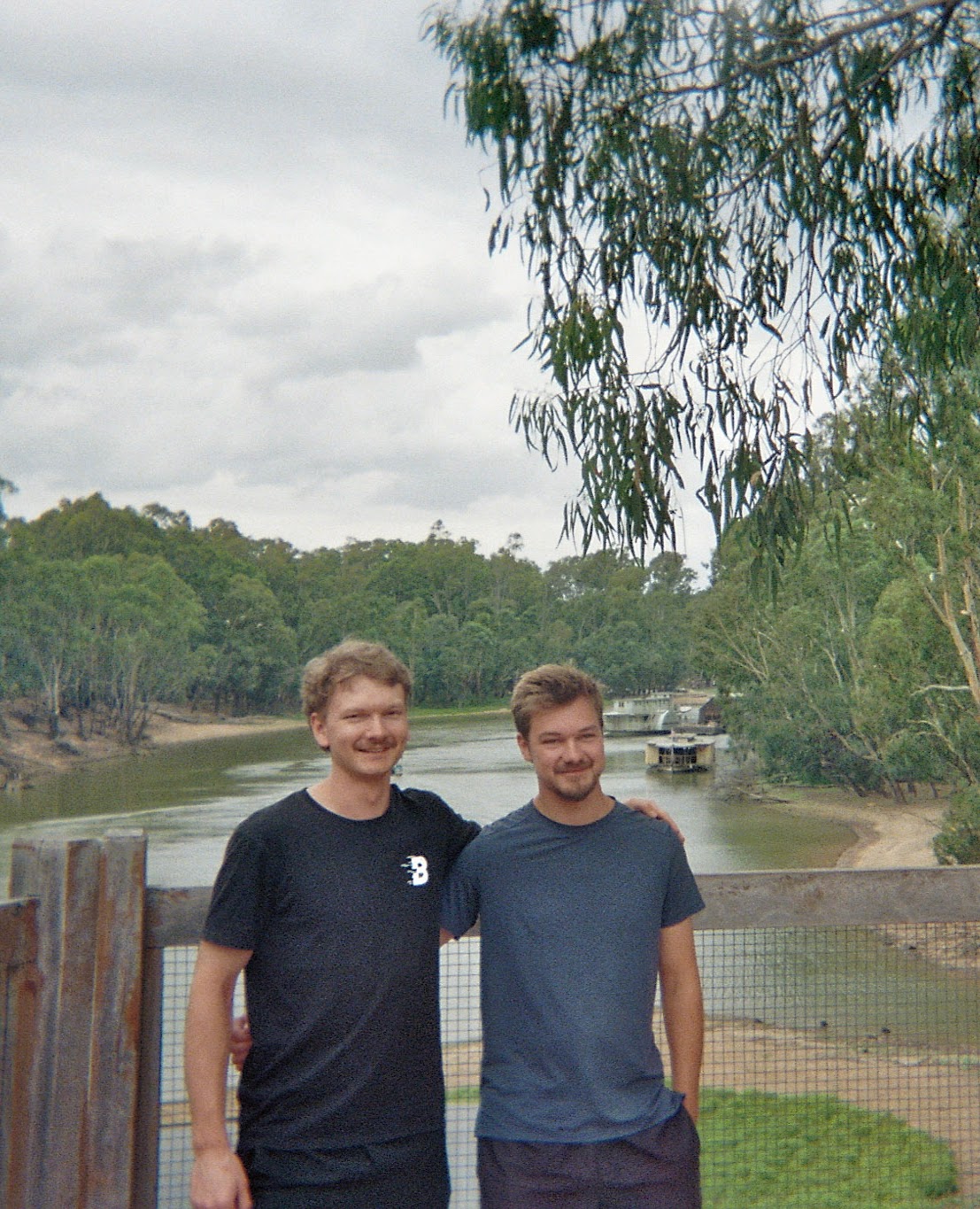
Somehow, this was a perfect end for the trip. The last day and night being really challenging and uncomfortable made me look forward to sleeping in a real bed, air-conditioning and not riding a bike again. I rolled into Echuca and proceeded to have three breakfasts in a row: Aldi, McDonald’s and at a café. I looked at the paddle steamers on the Murray and waited. My brother arrived at half past two. We hugged. Lucky for me, he also felt tired from a night out. He’d driven 400 kilometres from Mildura to pick me up, which by Australian standards is a casual drive and by Austrian standards is nearly the width of the entire country. And then, as if the weather had been waiting for this exact moment, the clouds rolled in. After ten days of not a single drop of rain, it began to pour. We had a four-hour road trip ahead of us, and a lot to catch up on.
What I Carried & What Carried Me
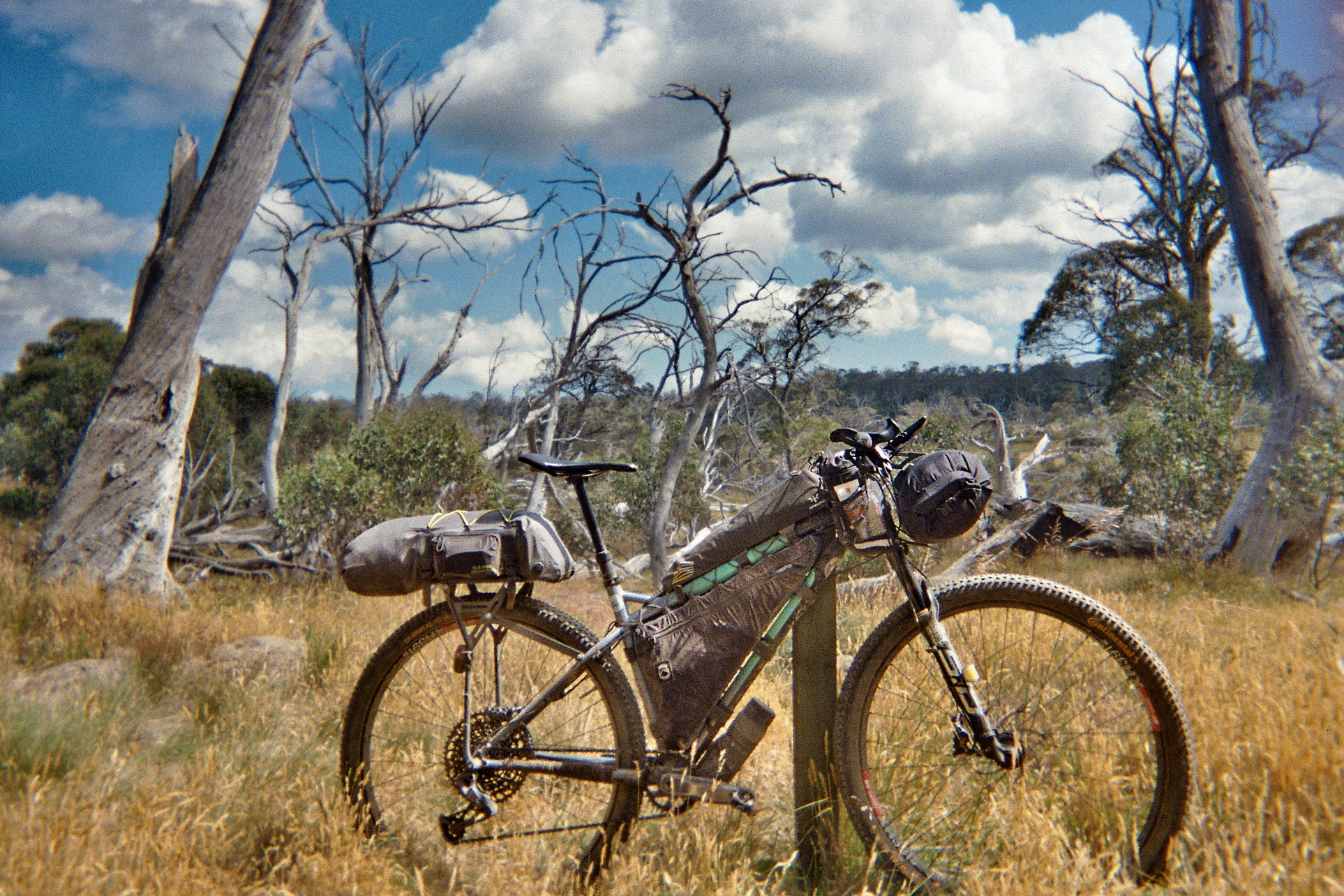
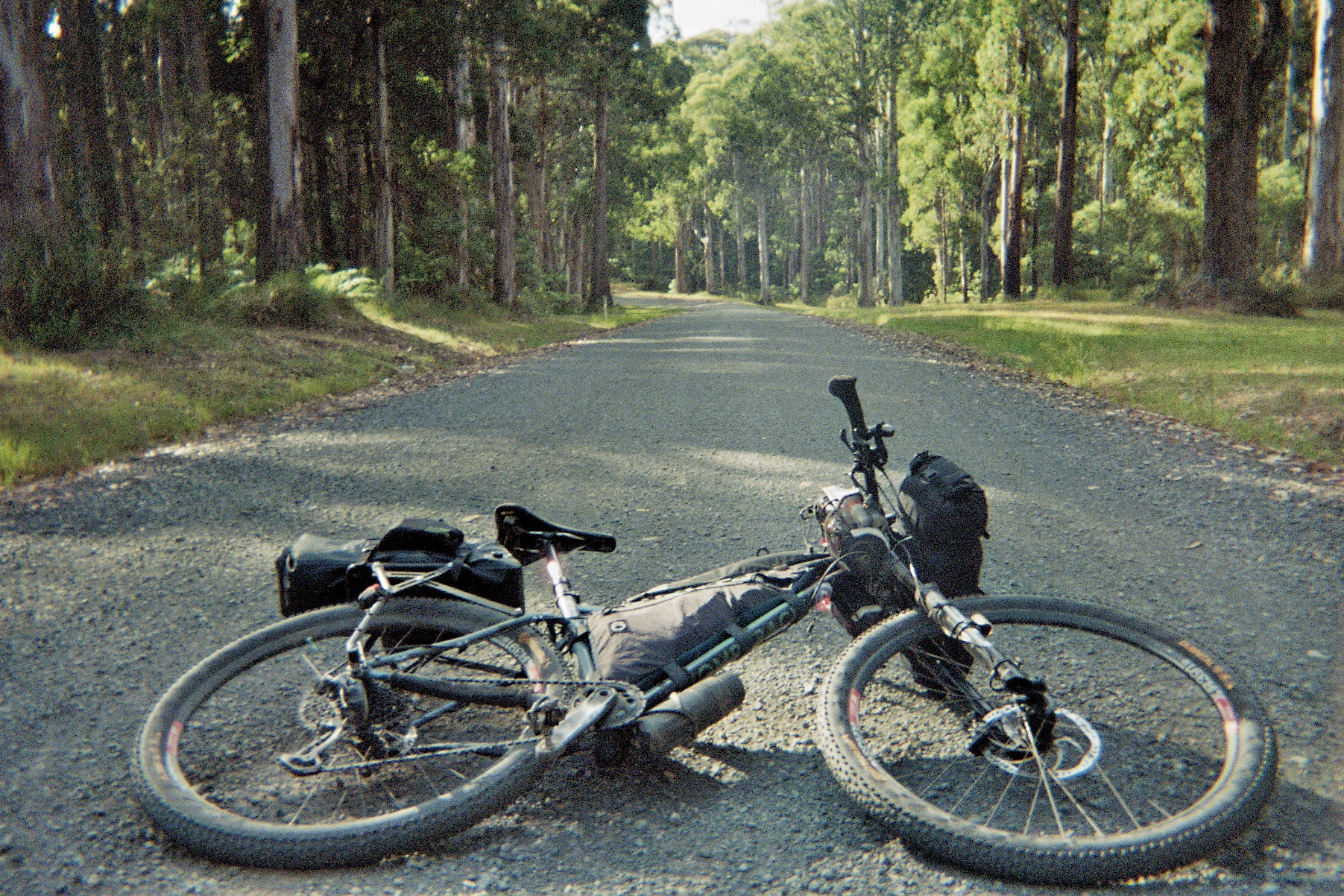
I rode the Hunt 1000 on my Bombtrack Cale 29er hardtail. This bike has carried me faithfully over some of the hardest routes there are, including the Silk Road and Trans Balkan Race. I ran 2.4 Continental Dubnital tires this time and was really pleased with the added cushion. I also ran a dropper post which proved invaluable on a few of the steep descents.
The dropper post installation was made possible by running an Old Man Mountain Elkhorn rear rack combined with the 12L Atlas pack. I really appreciated this reliable combo, its silence and the fact it doesn’t affect ride quality as much as some seatpost mounted bags. They performed without complaint across river crossings, corrugated gravel, and river crossings. But maybe the biggest plus was the fact that I could strap another 1.5L water bottle on the top on those days reaching 38 degrees, as well as would have had the mounting points for extra bottle cages on the rack. I also was testing a prototype OMM carrying cradle for a drybag which stored my tent, sleeping mat and sleeping bag. It kept the cables out of the way and reduced the clutter at the bars, which I very much appreciate.
The sleeping mat that failed on night three was the trip’s most consequential gear failure. The replacement, bought in Omeo, was bulky and less comfy, but functional. The heat training I’d done at home, indoor trainer with extra layers, sweating through until the windows fogged up, turned out to be the single best preparation I made. That and the salt tablets.
Beyond the gear: what I’ll remember is the freedom. The freedom of choosing between the many picturesque and mostly free campsites, to ride through empty country for hours, to stop at a creek and fill my bottles – snakes permitting. In Europe, bikepacking sometimes feels like an act of negotiation with regulations, landowners, and trying to escape the built-up areas. In Australia, the land is simply there, vast and indifferent. You ride through, and it permits you to. But it also doesn’t forgive you, if you come unprepared.
Leave A Comment