
February 3, 2026
Words by Erich Weidenkeller
Photos by Zach Emerson and Erich Weidenkeller
I first picked up a fly rod about ten years ago. As a lifelong cyclist, I soon discovered that fly fishing brought me many of the same joys as cycling: adventure, exploration, immersion in the outdoors. It wasn’t until quite a few years later however that I combined the two pursuits into a single activity: bikefishing. My bike allowed me to easily reach fishing spots that were otherwise time intensive to access. The result was more ground covered and new water fished!
Recently, my coworker Zach and I, both fly fishing enthusiasts, hatched a plan to take our bikes out for a bikefishing excursion connecting local waterways on a twenty-ish-mile singletrack loop. We’d ride our bikes equipped with Old Man Mountain gear to carry our rods, waders and boots and bring cameras along to document the adventure.
We floated the idea past our awesome bosses here at OMM and they bit! So we loaded up and pedaled off… on the clock. I guess we were about to become professional fly fisherman?

Erich Weidenkeller
Community and Content Manager
Hi! I’m Erich, Community and Content Manager at Old Man Mountain. I’ve worked in the bicycle world for a long time, and I love exploring the outdoors on two wheels. I’m a mountain biker through and through, but I can be found putting in miles on the curly bar bike as well.
Our bikefishing route: Pedaling past its namesake
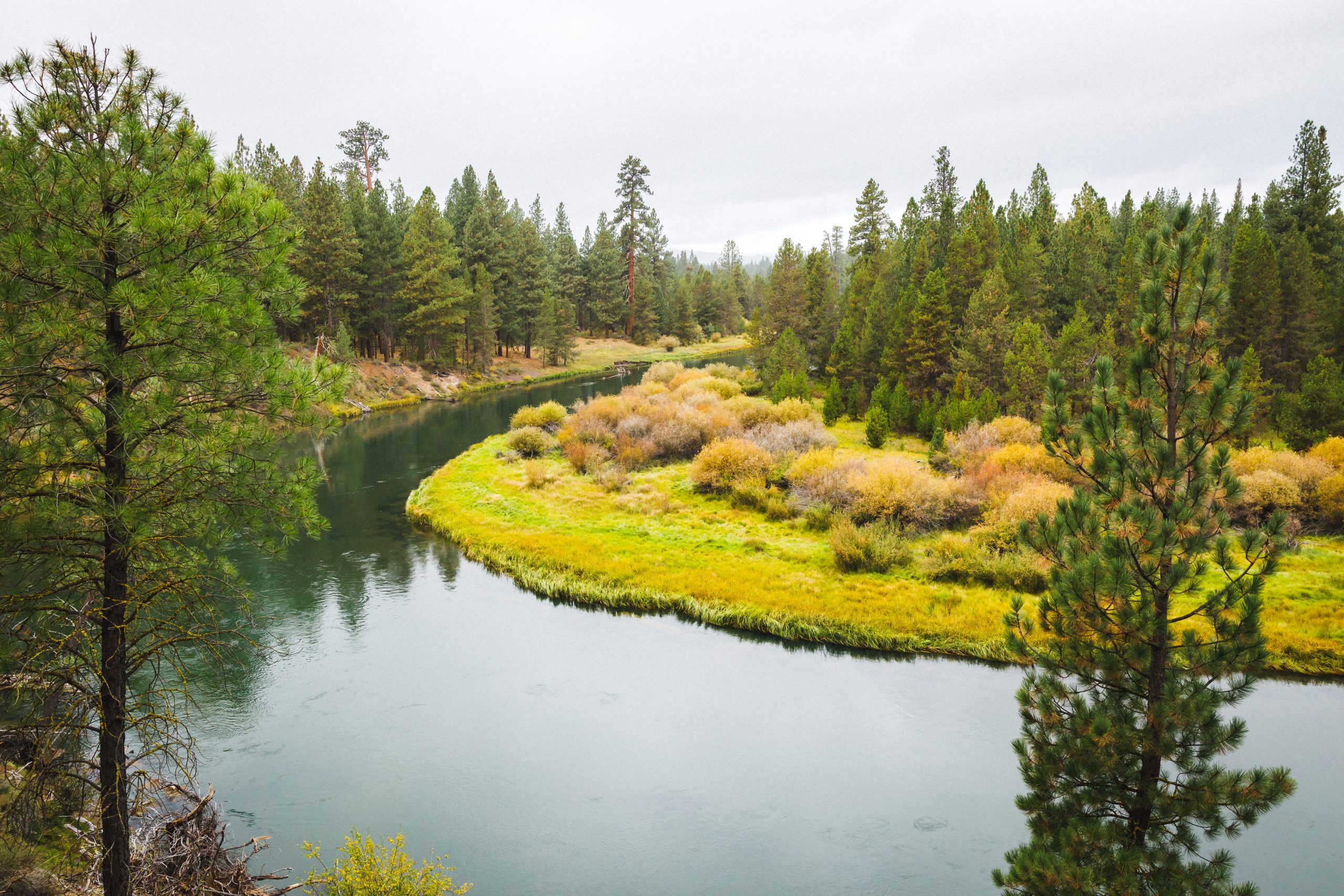
We chose a route called “Big Red“, put together by local cycling group Dirty Freehub. “Big Red” consists of singletrack trails and gravel roads with a touch of pavement. The path winds along both the Deschutes River and the Fall River as they pass through La Pine State Park. The route gets its name from a single pine tree along the trail in the park. The massive ponderosa pine, affectionately named “Big Red”, is the largest of its species in the world. The tree is almost 29 feet in circumference and over 500 years old.
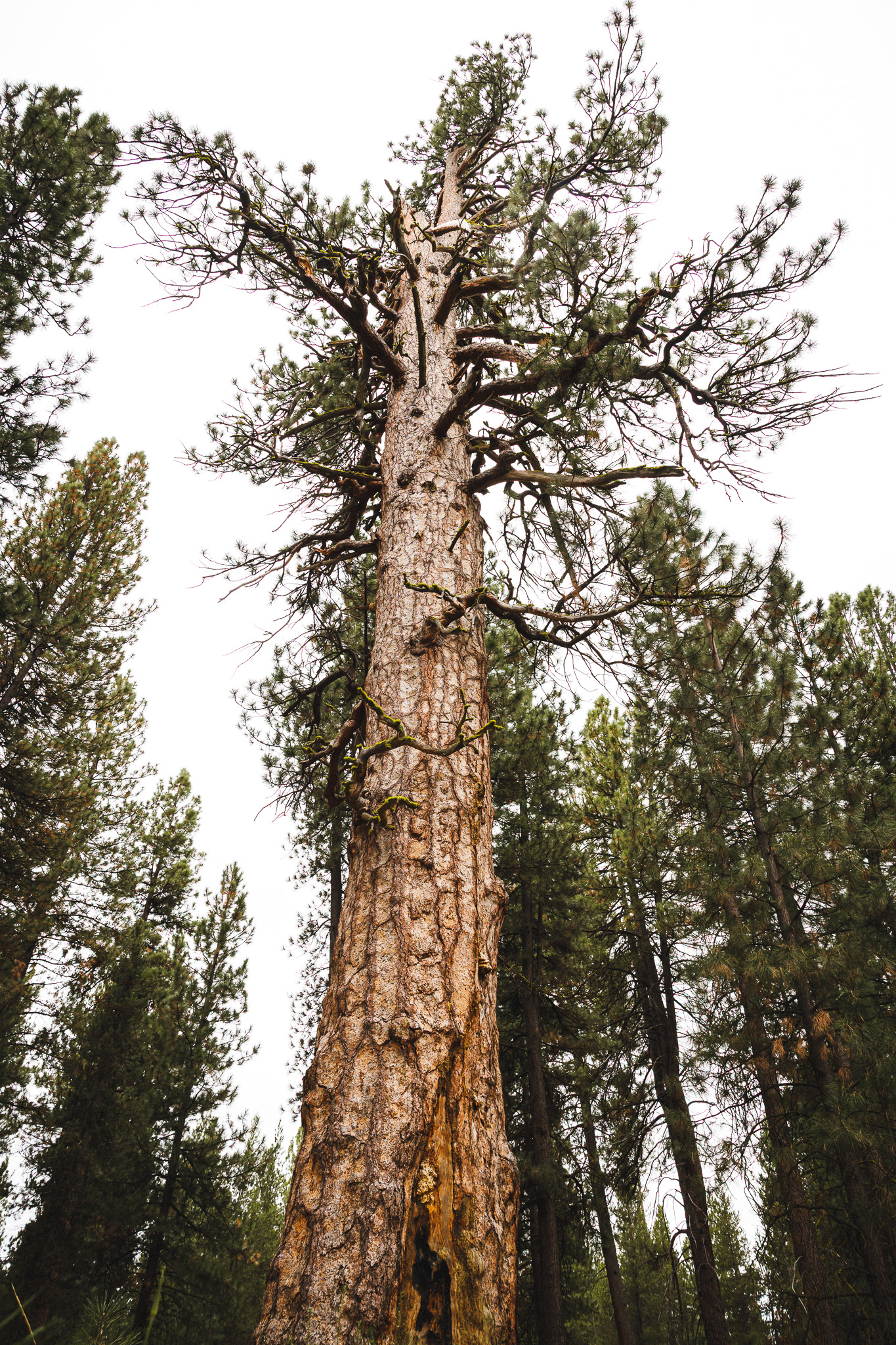
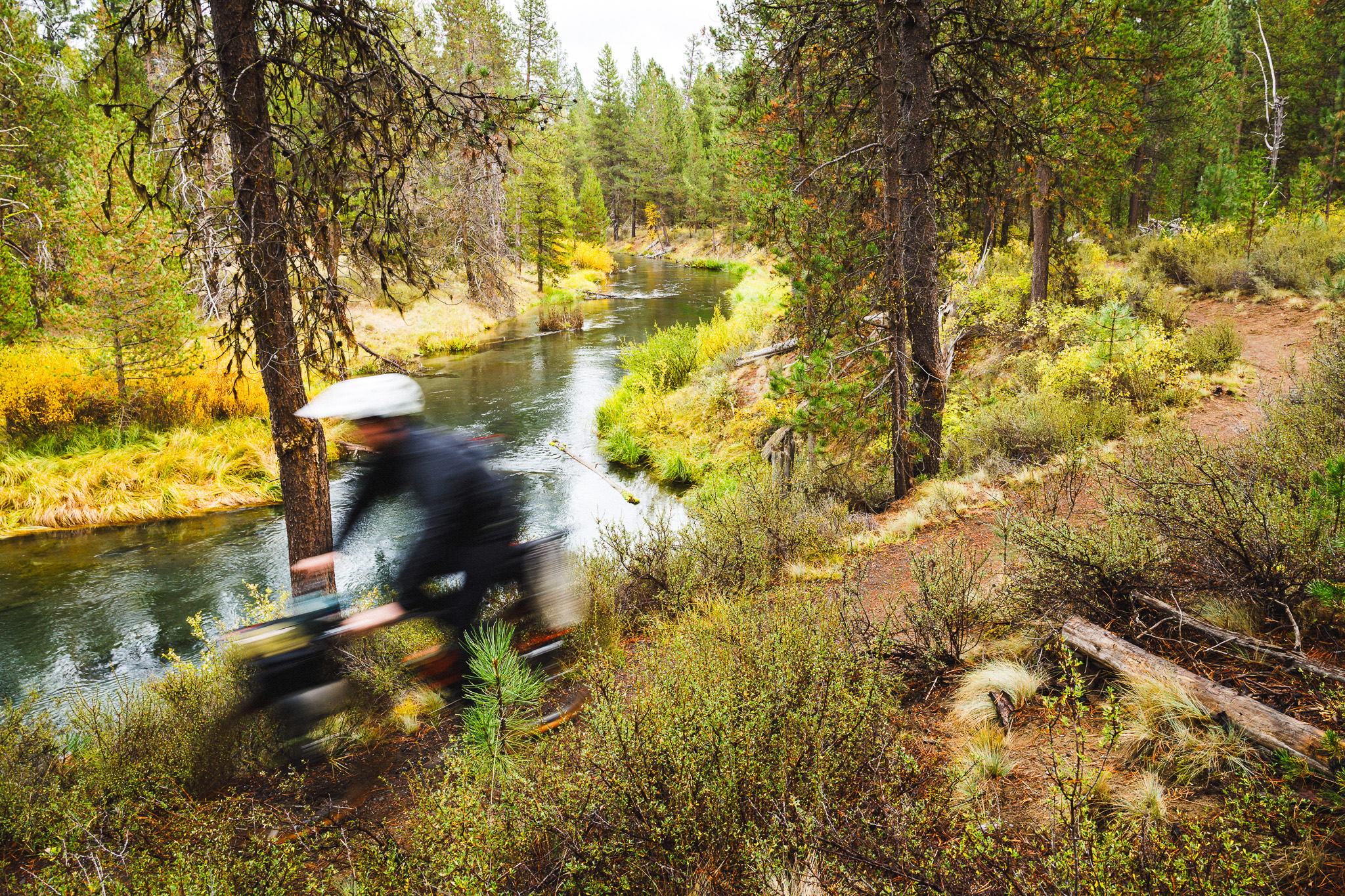
After pausing to admire the ancient giant, Zach and I continued along the trail. The riparian zone along the river is teeming with life. As we pedaled along we encountered hawks, golden-mantled squirrels, deer, and a (likely feral domestic) black rabbit. Eventually our path departed the banks of the Deschutes and continued through the pine forest towards the Fall River. The Fall is a spring fed tributary of the Deschutes. It runs barely eight miles from its source to its confluence with the Deschutes, but what it lacks in length it makes up for in captivation. The waters are crystal clear and the banks are vibrant. The natural beauty and the ease of access make the Fall River a popular fishing destination. It is a fly-fishing only waterway, and most people (like ourselves) practice catch-and-release methods. The clear water combined with savvy trout make it a challenging river to fish.
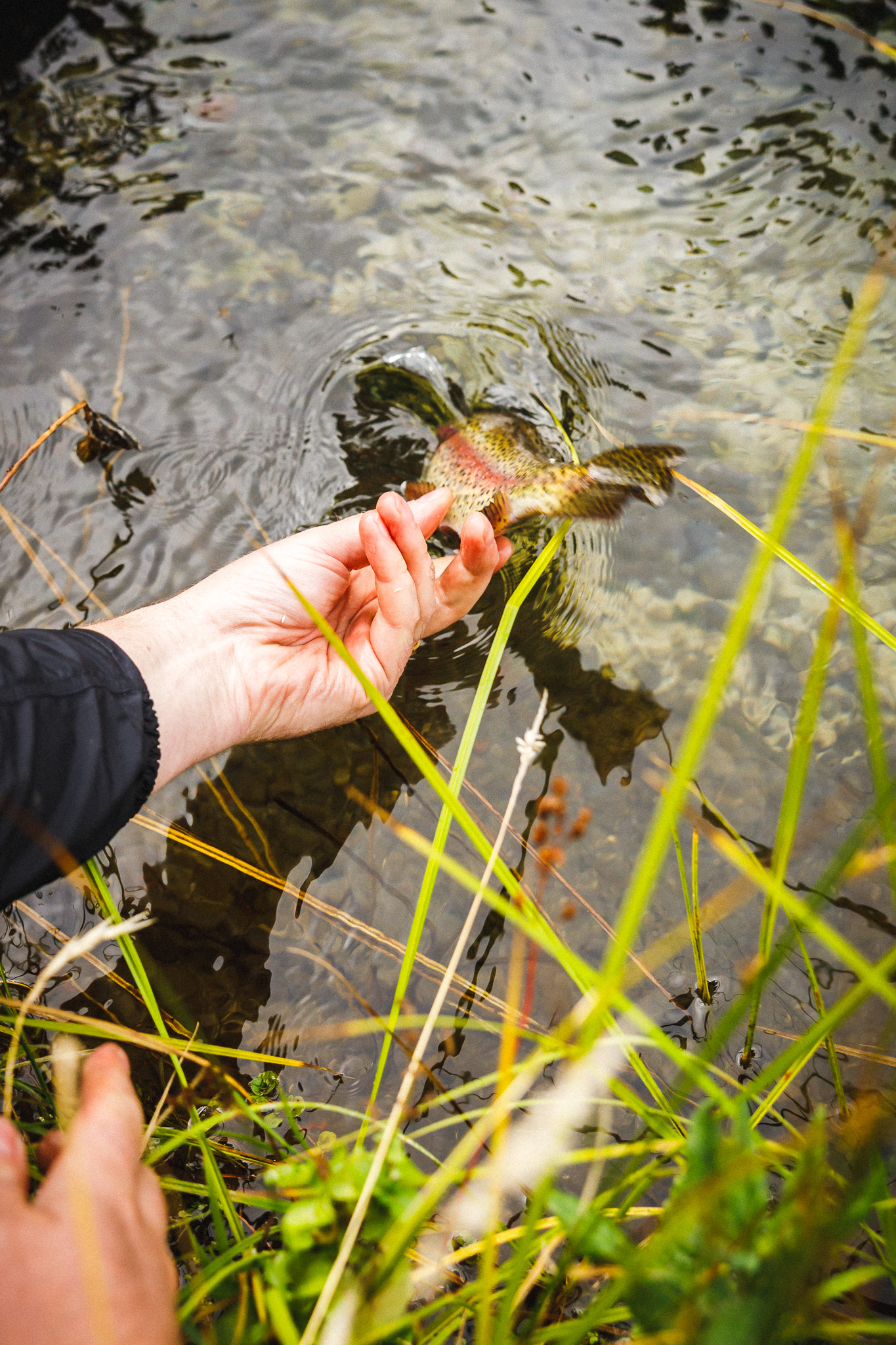
Fish on!
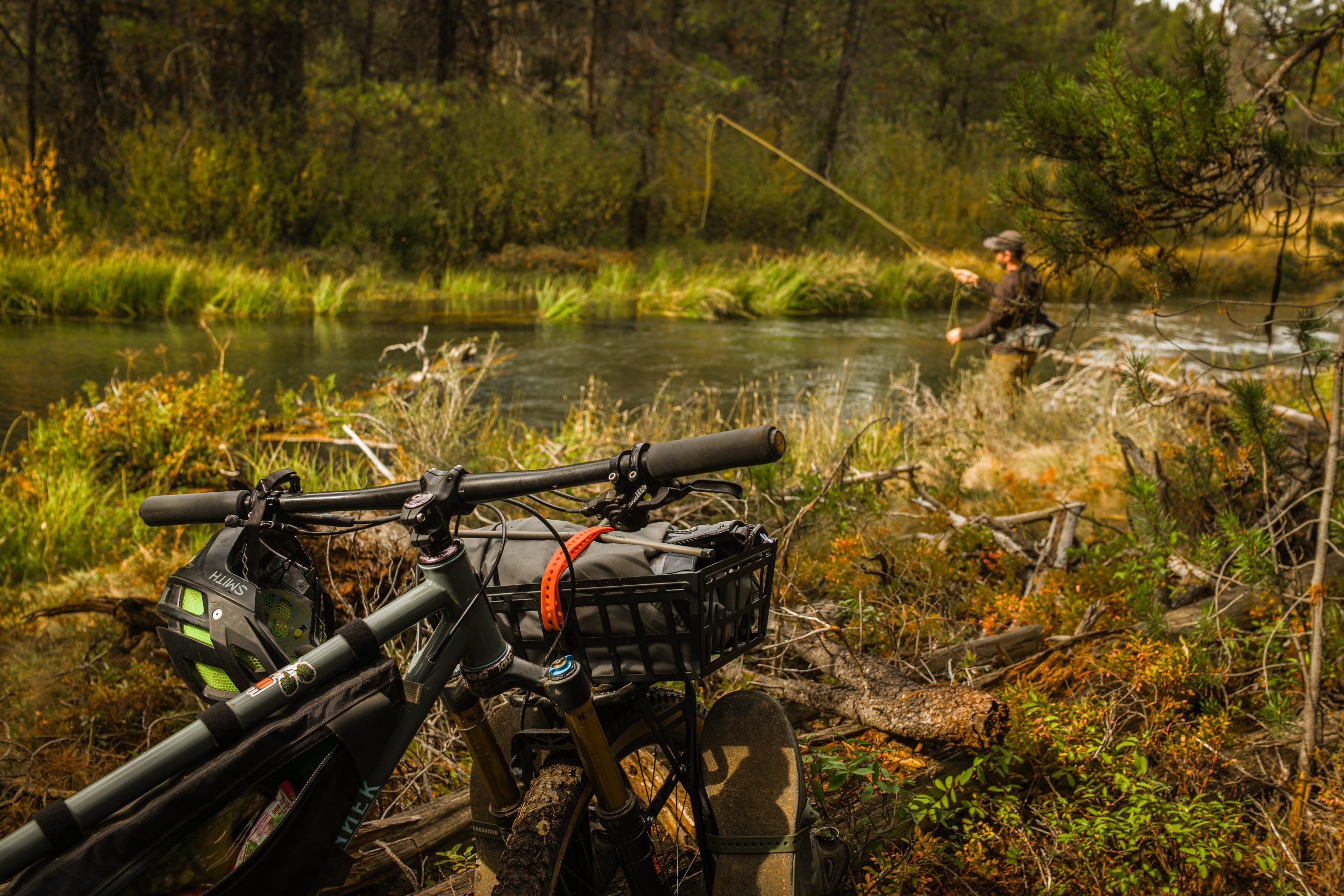
We followed the Fall River upstream until reaching the not-so-creatively named “Fall River Falls”. They are broader than they are tall, but they’re still a worthy spectacle for waterfall enthusiasts. We pushed past and decided to see about tempting some trout in the bends of the river above the falls. We’d brought all of our gear along on our Old Man Mountain racks, including waders and wading boots, but decided to simply rig up and try some casts without unpacking everything. We spotted a group of fish just below a submerged log and within a few casts Zach landed a trout. The fish were biting!
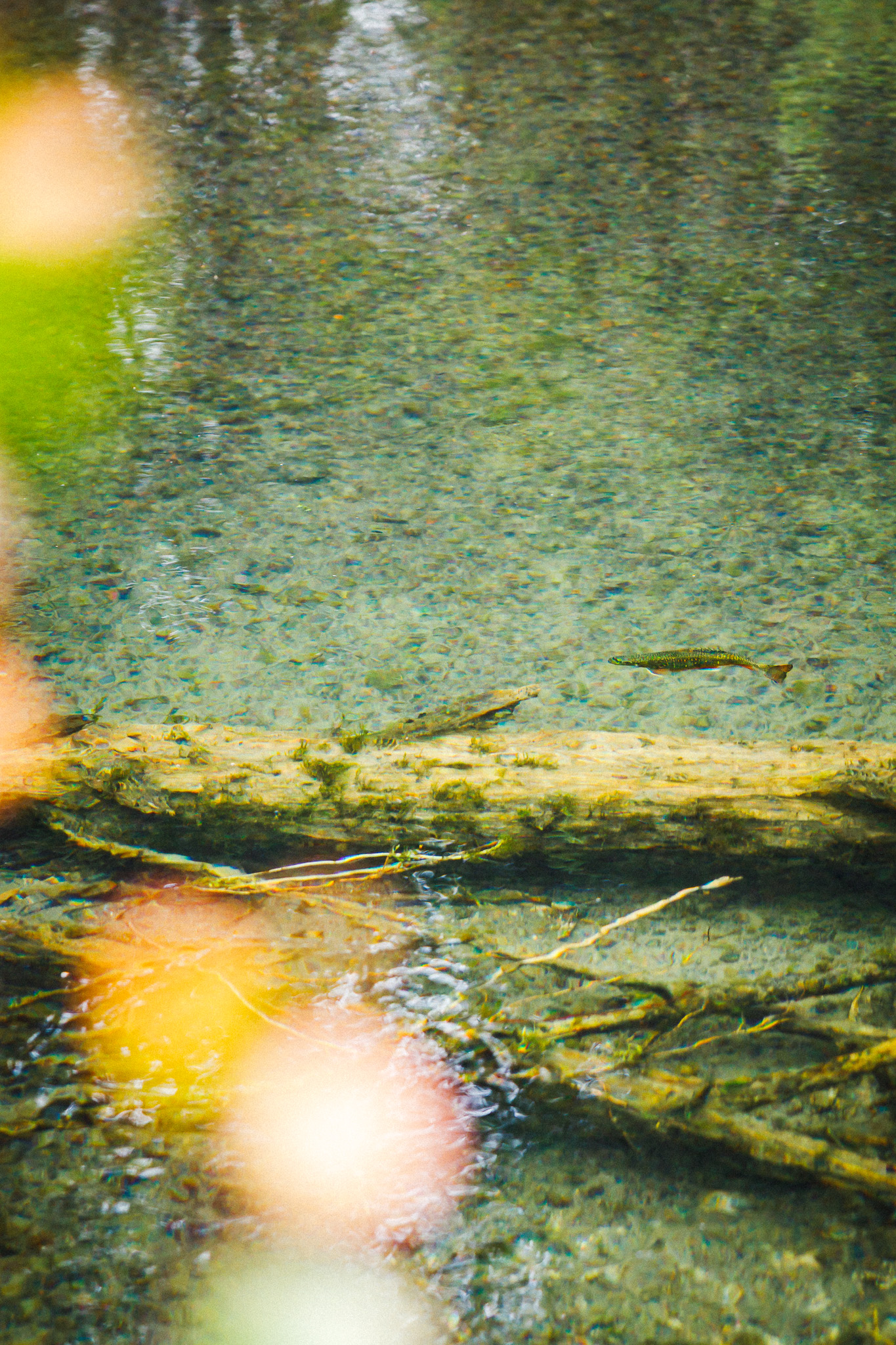
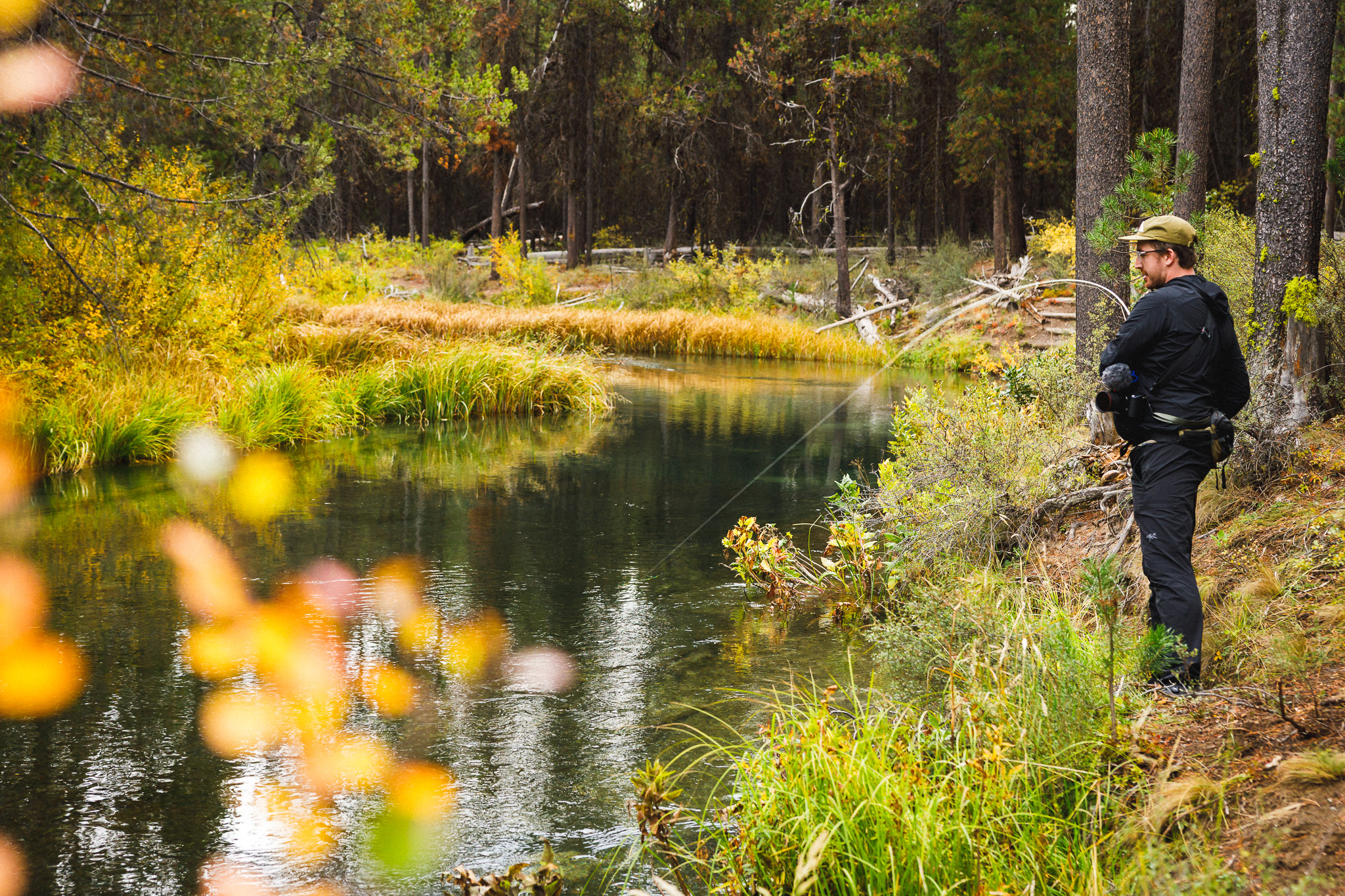
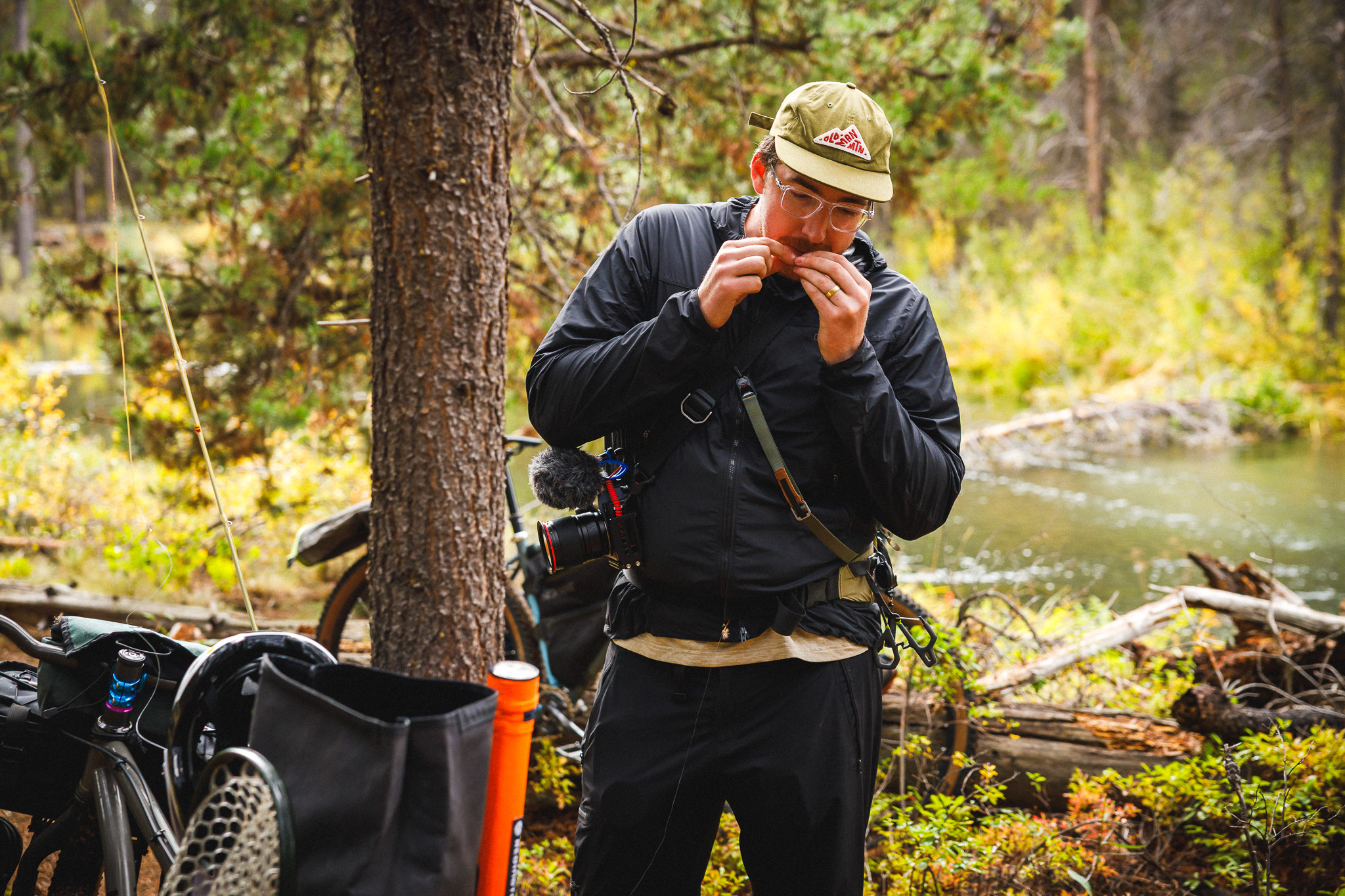
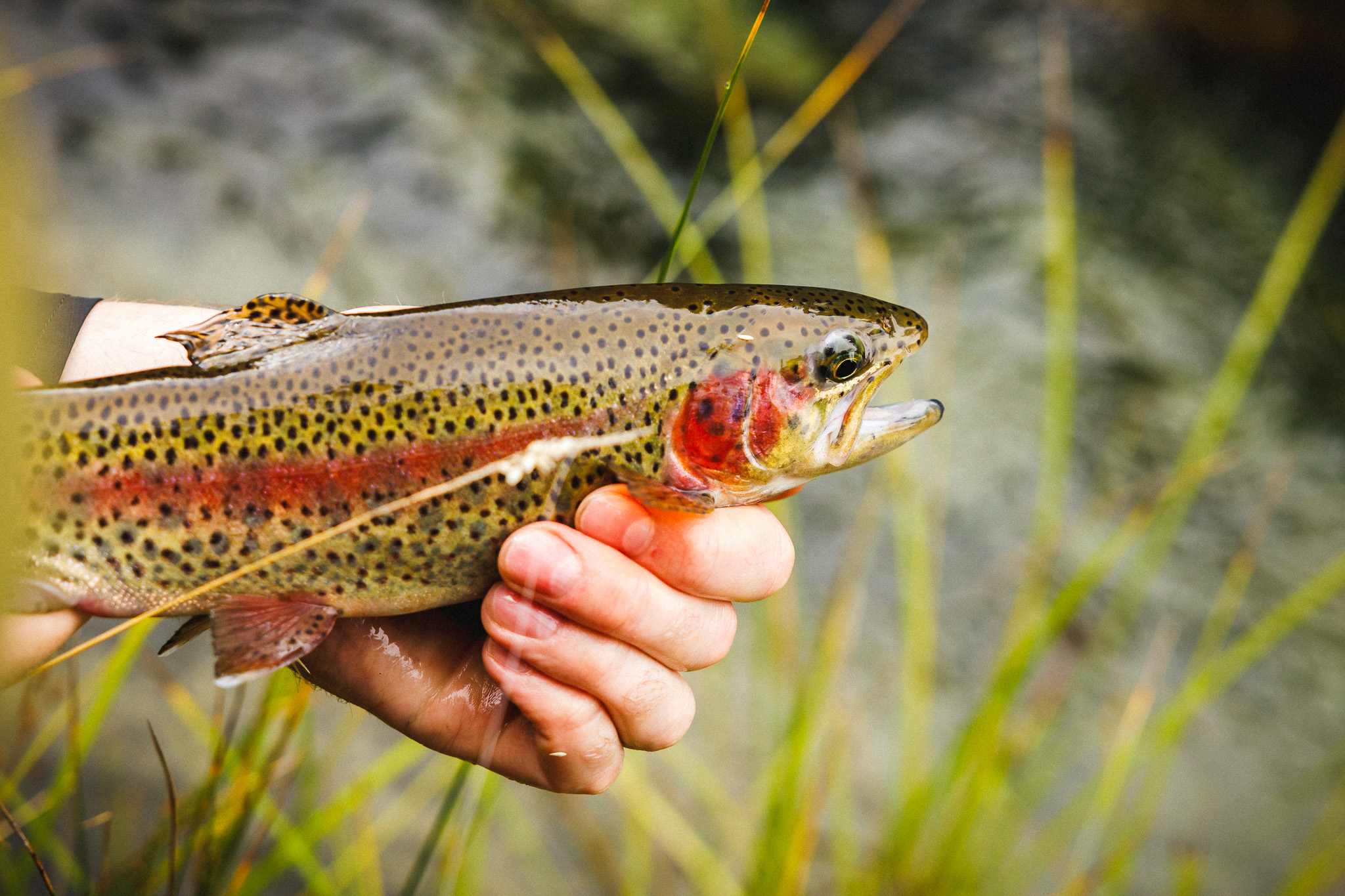
The first fish of the day wasn’t huge, but it was a beautiful (although non-native) brook trout. Zach and I spent the next couple hours leapfrogging each other along the river casting to different pockets of water. We were also attempting to document the experience. Between riding, fishing, filming and photographing, we forgot to retrieve the net from the rack on Zach’s bike. Of course my nicest rainbow trout of the afternoon slipped out of my hands before we got a photo of it. But that’s just part of fishing… tall tales to tell!
The “bike” part of bikefishing
Eventually the fishing slowed down, and Zach and I decided to wrap up the afternoon. We had a few more miles of singletrack ahead of us to complete the loop that we’d started earlier in the day. We followed the trail along the river, and we were surprised to discover quite a few fisherman upstream from us. We hadn’t seen anyone all day and were now pedaling past multiple people. Our bikes had allowed us to access water that was further from the trailhead. We’d fished a section of the river that took longer to reach, and that little difference worked out in our favor.
Eventually the trail wandered away from the river, and we pedaled along through the woods. The path was gentle and wide enough in places that we could ride side by side, allowing conversation. We recalled foiled casts and missed fish, and joked about our mutual oversight to use the fishing net even though we’d packed it along.
We both brought mountain bikes on this adventure, mine featuring a suspension fork and Zach’s being full rigid. Most types of bikes could handle the route well. Anything from a gravel bike to a hardtail to a full suspension would work just fine. A majority of the route is smooth, but there are some sections with rocks and roots. As long as you and your bike are capable of riding on dirt surfaces you’ll have no trouble.
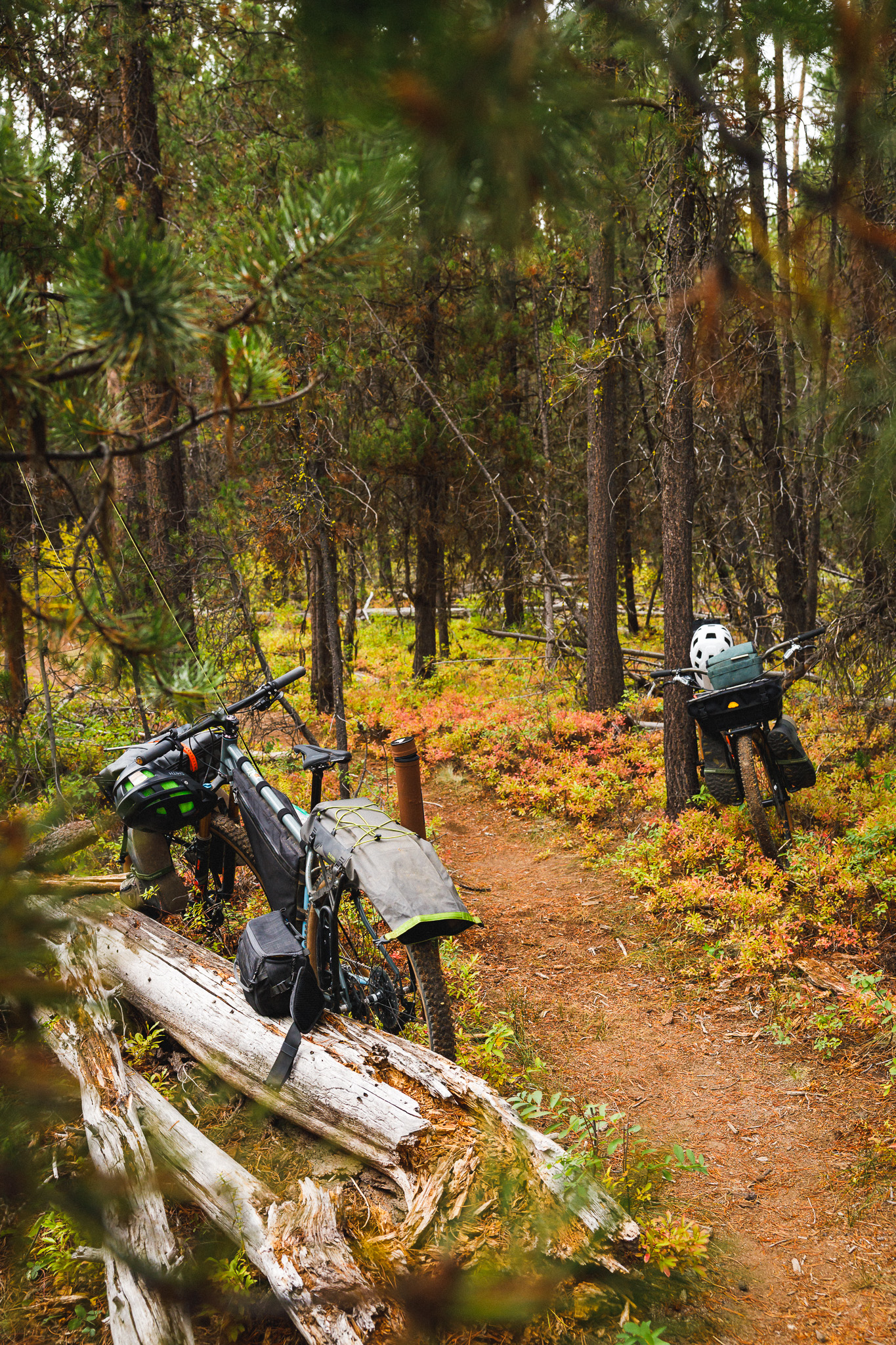
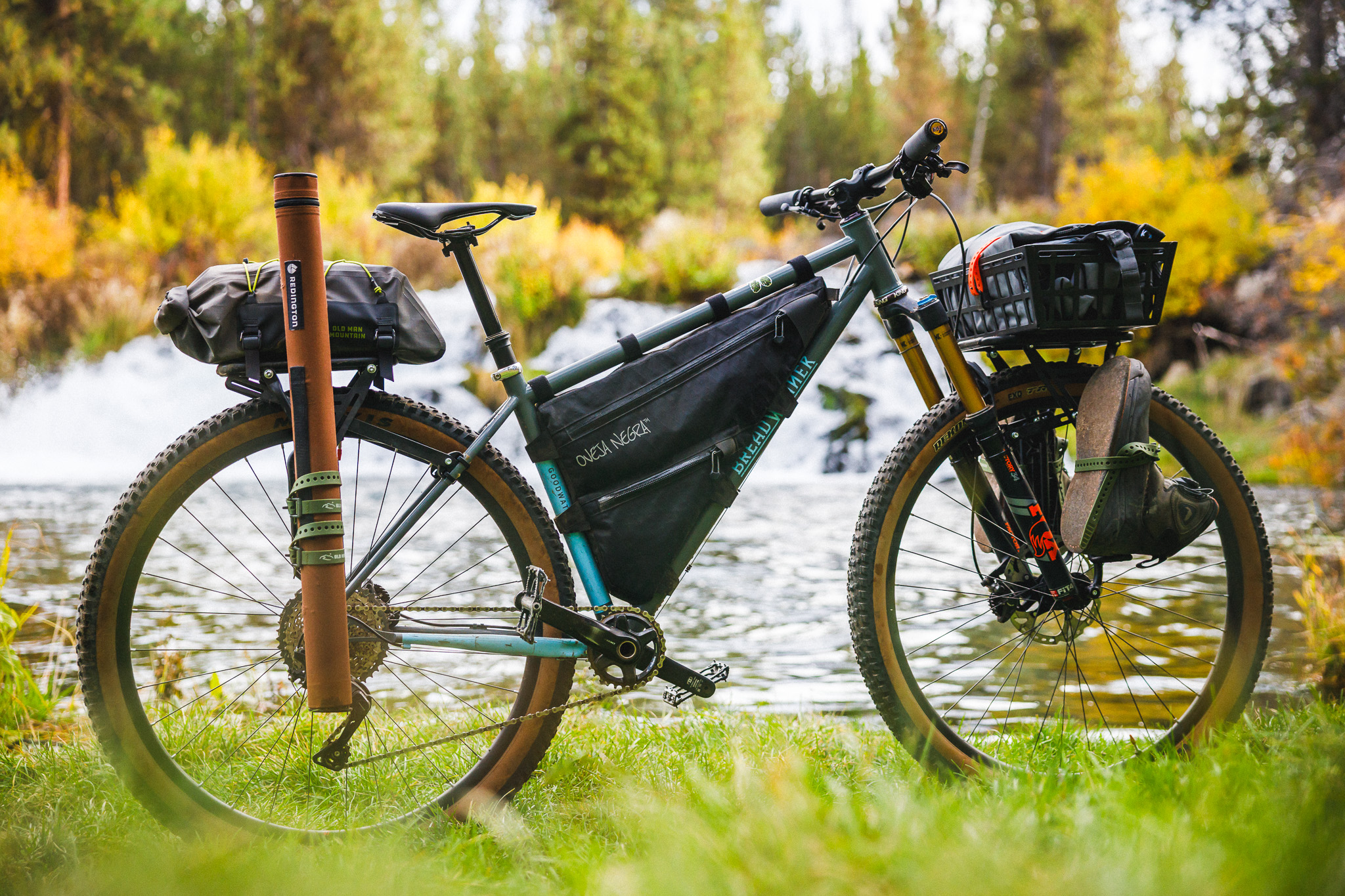
Bikefishing setup: racks make it easy
This was my first bikefishing adventure using Old Man Mountain racks to carry fishing gear. Previously I’d only bikefished during the warmer summer months where waders and boots weren’t necessary. Even then, I’d struggled with carrying my fly rod on my bike. I’d tried strapping it to my frame or handlebars with varying success, wary of interference with critical things like brake levers.
Though we didn’t end up using our waders and boots on this trip, it was a great trial run to get the gear setup dialed. Everything had its place, and it remained stable and secure on even the rougher sections of the route. Being able to carry all of our fishing gear, including the bulky waders and boots, on the racks was extremely functional. That left both of us free to carry our camera equipment on our bodies, which was great for alternating between bike riding and fishing.
What’s next?
After this successful bikefishing outing Zach and I are already talking about the next trip. There are a number of rivers around Central Oregon where bicycles can improve the fishing access, including the Metolius and many segments of the Deschutes. We’ve plotted out a few routes where we’re going to head during the upcoming fishing season. We’re also working on an upcoming blog post where we’ll dive a bit deeper on how and why we setup our bikes and racks the way we did. Until then, happy trails and happy fishing!
Erich Weidenkeller
Community and Content Manager
Hi! I’m Erich, Community and Content Manager at Old Man Mountain. I’ve worked in the bicycle world for a long time, and I love exploring the outdoors on two wheels. I’m a mountain biker through and through, but I can be found putting in miles on the curly bar bike as well.
Leave A Comment