
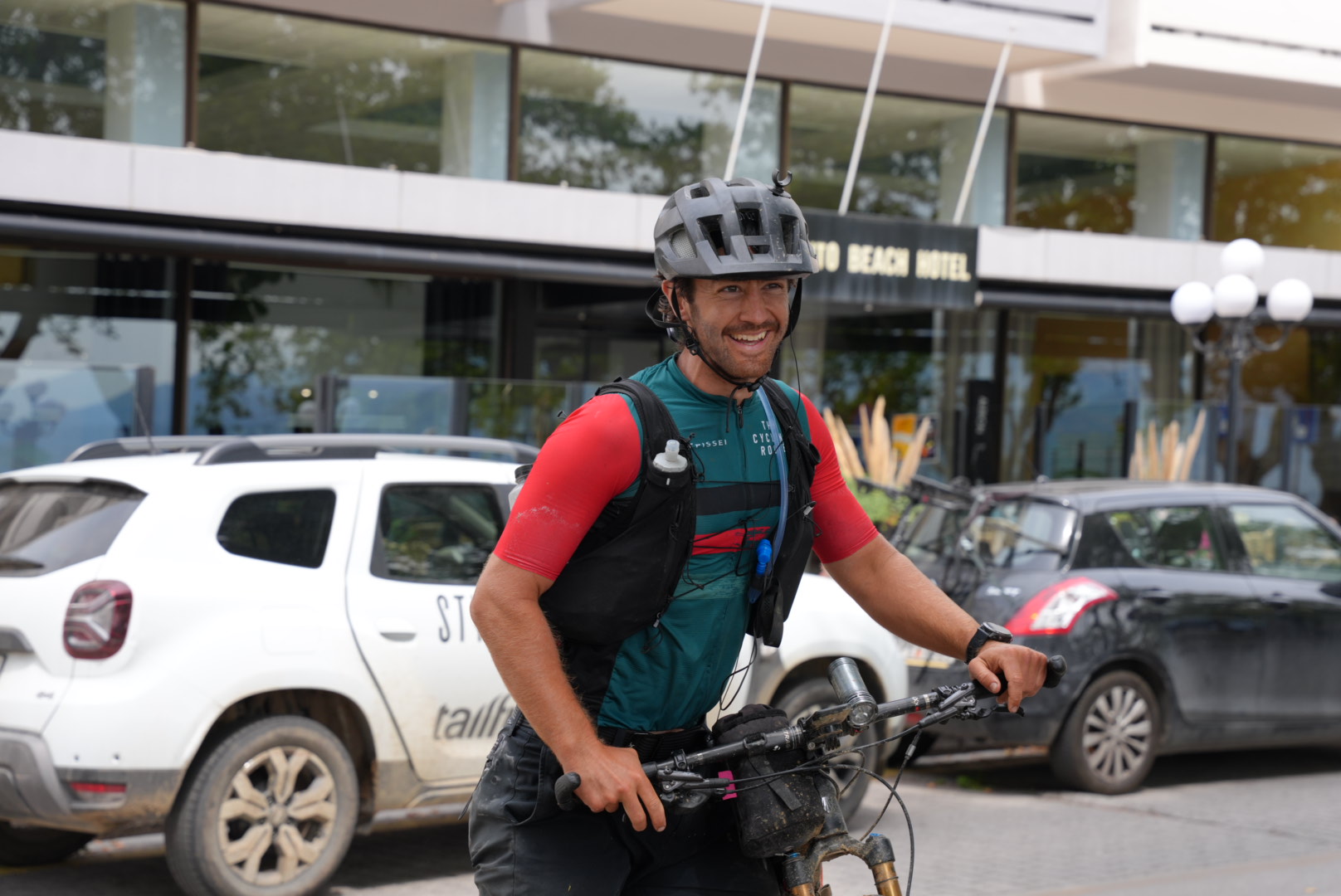
The Hellenic Mountain Race is an unsupported, multi-day bikepacking race through the mountains of Greece. It is one of three events that make up the Mountain Race Series, considered the preeminent bikepacking race series in the world.
Earlier this year Old Man Mountain rider Jake Dugdale decided to take on the Hellenic as his first ultra-endurance bikepacking race. An experienced cyclist who had pedaled all over the globe, he had never competed in any form of ultra-endurance racing. The Hellenic would be his foray into a new chapter of cycling.
After the Hellenic Mountain Race was in the books, Jake sat down to talk a bit about his experience. The following is a segment from a video interview Jake did after the race. The complete interview can be found on our YouTube: https://www.youtube.com/watch?v=Ps54mQyGnNs
Introduction
My name is Jake. I’m a rider for Old Man Mountain. I’m here in Lefkimmi, Corfu, Greece, which is where I’m based at the moment, and this is my Hellenic Mountain Race recap.
I’ve been bikepacking the last few years, ever since Covid. Through the world of YouTube, I found the Mountain Race Series, as well as ultra racing. I think the very first ultra race I watched was the Silk Road Mountain Race. As I delved deeper into it, of the three races the Hellenic mountain race seemed the easiest, which may or may not be correct.
Erich Weidenkeller
Community and Content Manager
Hi! I’m Erich, Community and Content Manager at Old Man Mountain. I’ve worked in the bicycle world for a long time, and I love exploring the outdoors on two wheels. I’m a mountain biker through and through, but I can be found putting in miles on the curly bar bike as well.
What were your initial expectations and how did they compare with reality?
So my initial goal was just to finish the race. It is amazing if you can get it done in about seven days. The first day went incredibly well and I was brushing shoulders with some really strong riders who put the dream in my head to try and get it done in about four days, which is a huge shock. Unfortunately, due to mechanicals, fitness, sleep strategy or lack of, and fueling (which I need to work on) that reality came crashing down. But I did manage to get it done in five days and six hours, so I was pretty happy.
Were there moments where you had to stop and take in the scenery?
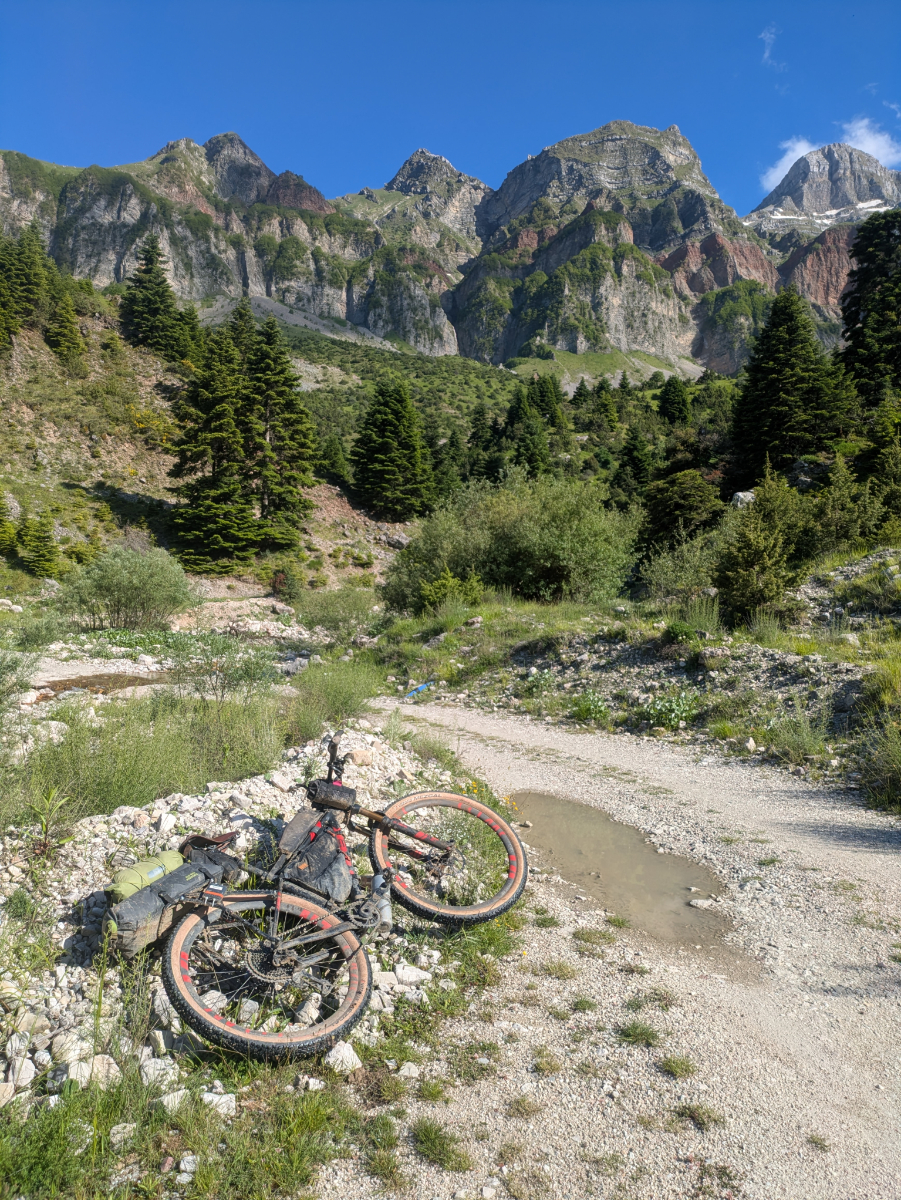
Three moments really come to mind. Two of them were coming over the top of some of the mountain passes. The first one was after Checkpoint 2 with a rider called Matt at sunset. The second one was coming over another pass with a rider called Kristoff: Both of us were very much in the hole, pushing our bikes, finding it very tough but it was really nice to be accompanied in that sufferfest. And finally, maybe the most satisfying was, I got a puncture just before the final climb, before the wind turbines to Nafpaktos. Getting that flat sorted, consuming every calorie I had, and then absolutely going for it on the last climb… seeing Nafpaktos below you with like a 20km descent was very satisfying.
Were there any low moments in the race?
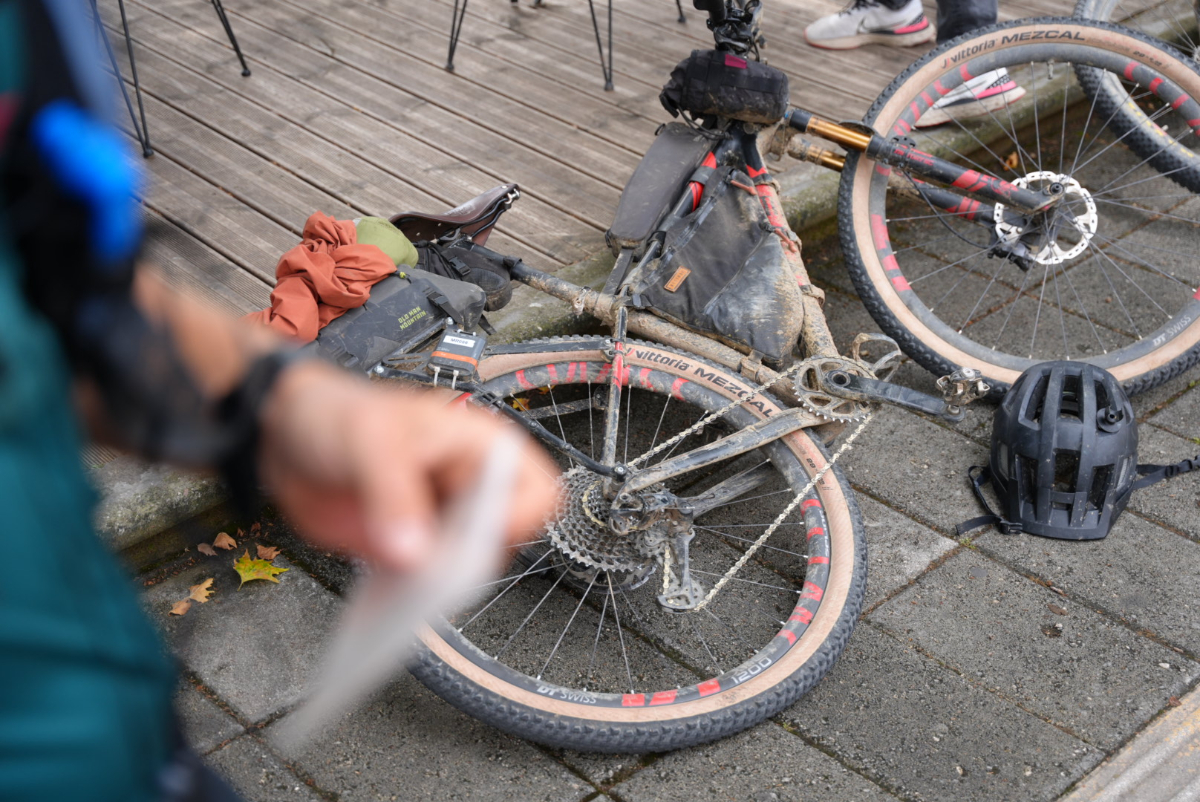
So on day three, a big one was a sidewall slash that I caused by moving my bike through a derelict building, made worse by the fact that my spare inner tube’s valves were too short. I didn’t check the valves before I packed, which was a rookie error. And the sound of freehubs constantly whizzing past as riders came past me was very frustrating.
And another low moment was on my final sleep. I’d sort of bedded down at six in the morning out the front of a cafe veranda, just to try and get three hours sleep because I was really struggling. And then the cafe owner, understandably, was a little bit disgruntled that I was sleeping too close to the entrance, so I was moved on after 30 minutes. The sun came up and I couldn’t sleep. So that final day was a real grind.
How did you cope with the tougher climbs or descents?
I really tried to pace my efforts on the climbs. Obviously there were many of them, and many descents. Actually descending is definitely a thing that I need to work on. But certainly for the climbs I really tried to pace my effort. And if it got too tough I relied heavily on music to get me through. I learned that I definitely cannot cope with 30 minutes of sleep per night. I certainly need a little bit more.
How did your setup perform? Would you change anything?
On the whole my setup was great. I can’t fault anything that I brought. I jumbled together just a bunch of bikepacking stuff and old snowboarding stuff and just warm layers for my kit and yeah, sleeping bags and stuff like that. I think the kit was absolutely fine. I carried too much stuff. I carried an extra spare set of clothes to sleep in. On bikepacking trips I really like to sleep clean, so I always have a wash before I go to bed, but I found that in the race I was perfectly happy just bedding down in the kit I was wearing for the day, which is pretty gross, but I mean, you can pack a bit lighter.
I was begging for a 30 tooth chainring as well. Maybe the one thing I didn’t think about was the size of my chainring. I have a 34 tooth chainring, and as soon as I got to registration, I saw everyone else seemed to have 28s and 30s. So I’ll be going for a 30 next time.
I spent quite some time trying to work out a fueling system I could keep up for days without upsetting my stomach. I was aiming for about 50g of carbs per hour. I think maybe in a normal flatter race that would have worked. I didn’t really consider the amount of elevation and the effort that would require, and I really felt underfueled for a lot of the race. On the occasion that I did get to a shop and I chugged a liter of juice and ate four croissants and had some pasta, the 3 or 4 hours afterwards I just felt incredible. So going ahead, I need to eat a little bit more.
Did you stick to a plan or adapt along the way?
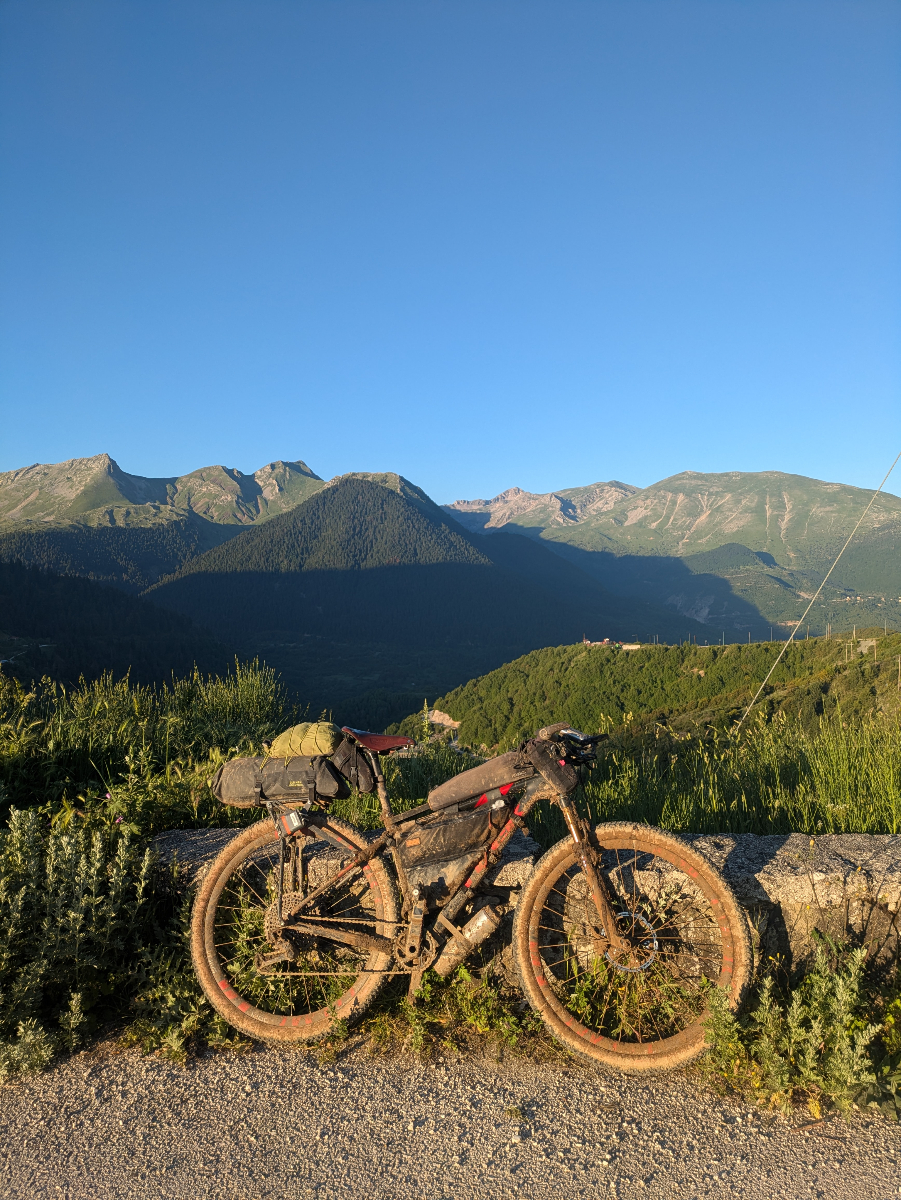
My plan was purely to ride until I needed sleep, and then sleep for 30 minutes and then try and do it again. That worked for about 36 hours and then the wheels started to fall off. So I started to adjust accordingly. Other well seasoned riders gave me lots of advice on how you should have some more sleep. So going forward I’ll be doing a bit more of that.
Did you meet anyone that left an impression on you?
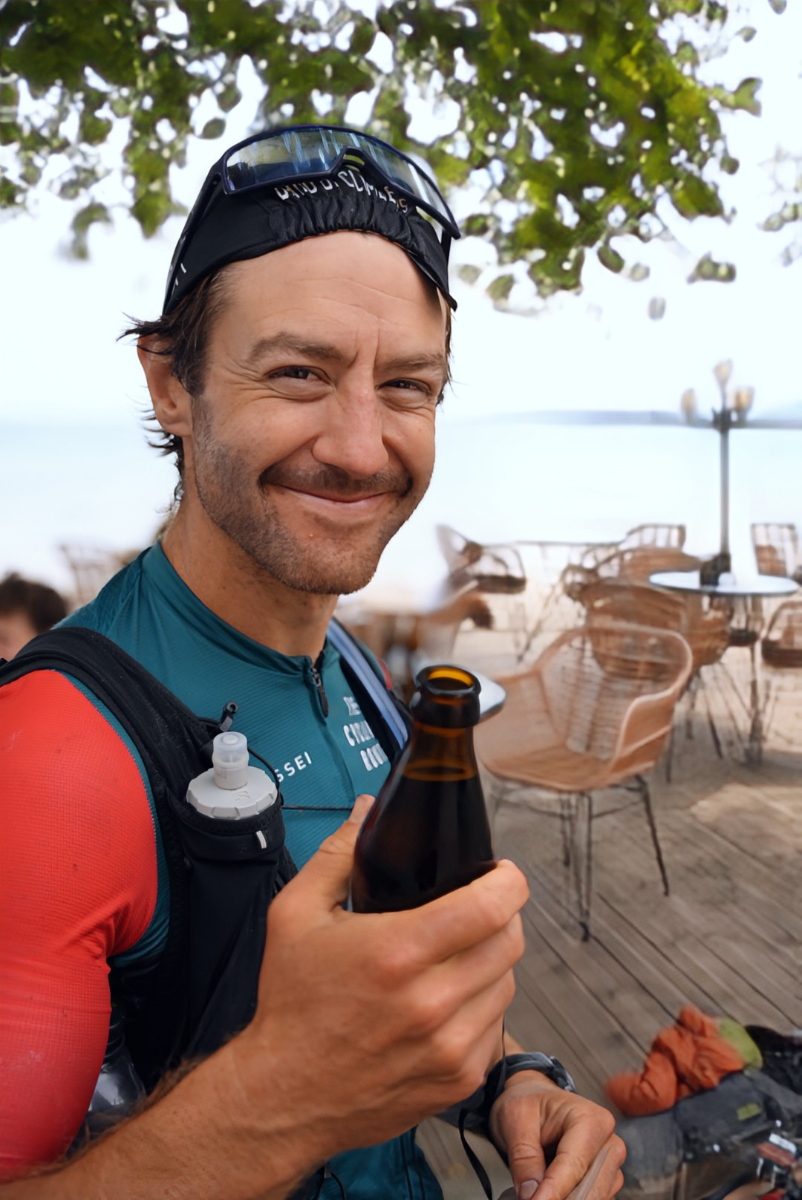
I found spending time around other riders was a real mental boost. It really takes your focus away from the task at hand. I was crossing wheels with a few riders quite consistently. Some guys named Tanner Jackson, Matt Schwiker, Kristoff Claris, and Tom Morgan, just back and forth with them throughout a lot of the race. And so I got to know them quite well and that was really nice. Another person that really stood out happened on my second night in the bivvy. It was about 4 a.m. in Metsovo. I’d just set up my tent and this woman ran out of a bakery towards me, and I thought I was going to get moved on or shouted at or something, because I was in a bit of a public space. And she ran over and gave me some cheese sandwiches and some bottles of water. So that was a real godsend.
A moment that made you smile or laugh?
Definitely coming over the top of the ridge by the wind turbines to see the finish line below. That was good, I definitely smiled and was happy. And also finally managing to reseat the rear tire with the dodgy, short valves on the inner tubes. Again, very satisfying because I was contemplating a scratch at that point.
How did it feel to cross the finish line?
I was totally elated. It was really nice to see a bunch of riders that I recognized and had ridden with. Everyone was hanging around at the finish line with beers and food and water. I was immediately welcomed. That was really nice, that was a really good touch. I crossed the finish line, let go of the bike, a few hugs, beers, ice cream, shower. And then basically just fell apart. My legs were in bits.
Any advice for someone considering this race?
Yeah. Plan your fueling around the elevation and the effort that would be required to get the elevation done. It will really make a difference. And also, water is abundant on the course, so you probably don’t need to carry as much, which will be a big weight savings.
Erich Weidenkeller
Community and Content Manager
Hi! I’m Erich, Community and Content Manager at Old Man Mountain. I’ve worked in the bicycle world for a long time, and I love exploring the outdoors on two wheels. I’m a mountain biker through and through, but I can be found putting in miles on the curly bar bike as well.
Leave A Comment